China Top Biodegradable Packaging Materials Manufacturers

China has become a major source of biodegradable packaging materials for food, retail, agriculture, and e-commerce applications. Its manufacturers offer products made from paper, molded fiber, PLA, PBAT blends, starch, and other renewable or compostable inputs. However, material claims can differ widely between suppliers.

This guide examines leading Chinese manufacturers through practical purchasing criteria. These criteria include material composition, factory experience, production capacity, quality control, customization, and export support. It also considers testing records, compostability documentation, food-contact suitability, and production consistency. A strong supplier should explain where its materials break down and under which conditions.

Real details matter.

A factory may show attractive samples, yet fail to maintain stable thickness during mass production. Another supplier may provide low prices but limited technical documentation. Buyers should request samples, inspection reports, certifications, and clear packaging specifications before placing large orders. Independent verification remains valuable, especially for compostable claims and international market requirements.

The manufacturers discussed here are not ranked only by scale or online visibility. Their suitability depends on the buyer’s product, budget, delivery schedule, and target market. No supplier is perfect. Some excel at molded pulp, while others perform better with flexible films or coated paper. This distinction is easy to miss. Careful comparison can reduce waste, prevent misleading claims, and support more responsible packaging decisions.

China Top Biodegradable Packaging Materials Manufacturers

Definition and Scope of Biodegradable Packaging Materials

China Top Biodegradable Packaging Materials Manufacturers

Definition and Scope of Biodegradable Packaging Materials

Biodegradable packaging breaks down through microorganisms under defined environmental conditions. The process should produce natural substances, such as water, carbon dioxide, biomass, or methane. “Bio-based” means plant-derived, but it does not automatically mean biodegradable. Compostable packaging is a narrower category. It must meet specific time, temperature, and residue requirements.

The scope includes films, pouches, trays, coatings, food-service items, and protective fillers. Materials may use starch, cellulose, agricultural fibers, or certified biodegradable polymers. However, performance depends on thickness, additives, moisture, and disposal conditions. A thin film may degrade in an industrial composting facility but persist in soil or seawater. That distinction matters. The boundary is not always clean.

UNEP’s 2023 report estimated global plastic production at about 430 million tonnes annually, with roughly two-thirds linked to short-lived products. The OECD Global Plastics Outlook reported 353 million tonnes of plastic waste in 2019, and packaging represented about 40 percent. These figures explain the demand for alternatives, but replacement alone is not enough. Manufacturers should verify biodegradation claims through recognized standards, laboratory testing, and independent certification. Real-world collection remains a weak point.

Tips: Check the required disposal route before selecting a material. Ask for test conditions, certification scope, barrier data, and shelf-life results. Do not confuse “degradable” with complete biodegradation. Packaging that needs industrial composting may fail where that infrastructure is unavailable. Source: UNEP, Turning off the Tap, 2023; OECD, Global Plastics Outlook, 2022.

China Top Biodegradable Packaging Materials Manufacturers — Definition and Scope of Biodegradable Packaging Materials

Biodegradable packaging materials are designed to break down through the action of microorganisms under suitable environmental conditions. The chart compares representative densities of commonly used biodegradable material types; actual values vary by formulation, additives, and processing method.

Unit: Representative density in g/cm³. Lower density generally indicates lighter packaging, while performance also depends on barrier properties, strength, moisture resistance, and composting conditions.

Key Materials Used by Chinese Biodegradable Packaging Manufacturers

China Top Biodegradable Packaging Materials Manufacturers often work with several material families.

Polylactic acid, or PLA, comes from fermented corn starch or sugar-based feedstocks. It offers clear appearance and firm structure for cups, trays, and films. However, PLA usually needs controlled industrial composting conditions. It may not break down quickly in a backyard compost bin.

PBAT is a flexible biodegradable polyester frequently blended with PLA or starch. This combination improves film softness and sealing performance. Starch-based materials can reduce fossil feedstock use, but humidity may weaken them during storage. Molded fiber packaging uses bagasse, bamboo, wheat straw, or recycled paper pulp. It feels natural and handles hot food well. Water-based coatings can improve grease resistance, though they may affect recycling or composting routes. Material selection is never perfect.

Tips: Check the exact material blend, thickness, and intended disposal system. Ask manufacturers for migration tests, compostability evidence, and production samples. Test filled packaging under heat, moisture, stacking, and transport pressure. A package can look sustainable yet fail during delivery. Real performance matters more than attractive labels.

Cellulose films provide transparency and good printability for lightweight applications. Some manufacturers also use bio-based coatings to improve barrier performance. These materials need careful sealing and moisture control. Experienced suppliers should explain test methods, processing limits, and disposal conditions clearly. Buyers should compare technical data with actual factory samples before approving large orders.

Manufacturing Technologies and Quality Standards in China

China’s biodegradable packaging sector is moving from material trials toward controlled, measurable production. European Bioplastics reported global bioplastics capacity at about 2.18 million tonnes in 2023, with continued growth expected through 2028. Chinese manufacturers commonly process PLA, PBAT, starch blends, and paper-based coatings through extrusion, blown-film lines, thermoforming, and injection molding. Temperature control matters. Small heat variations can change sealing strength, clarity, and compostability performance.

Quality control increasingly follows GB/T 41010-2021, which addresses biodegradable plastics, product identification, and degradation requirements. Testing should include melt flow rate, film thickness, tensile strength, seal strength, and migration safety. Compostability claims also require controlled laboratory conditions, not simple outdoor exposure. OECD’s Global Plastics Outlook estimated that only 9% of global plastic waste was recycled in 2019. That figure exposes a practical weakness: biodegradable packaging cannot solve poor collection systems alone.

Advanced factories use inline thickness gauges, gravimetric dosing, and digital traceability for each production batch. They also test disintegration, biodegradation, heavy metals, and barrier performance. However, data quality is not always consistent across suppliers. Some technical sheets provide limited testing details. That deserves scrutiny. Independent laboratories and documented test conditions improve reliability, especially for food-contact packaging and export orders. Manufacturing is improving, but certification language can still outrun real-world disposal infrastructure.

China Top Biodegradable Packaging Materials Manufacturers - Manufacturing Technologies and Quality Standards in China

Material-focused overview of commonly manufactured biodegradable packaging solutions, production technologies, and quality-control requirements in China

Material Category Primary Feedstock Common Packaging Formats Manufacturing Technologies Typical Performance Characteristics Key Quality-Control Items Relevant Standards and Test References End-of-Life Considerations
Polylactic Acid (PLA) Fermented plant-derived sugars or starches converted into lactic acid and polymerized Cups Trays Lids Films Food containers Pellet drying, extrusion, sheet extrusion, thermoforming, injection molding, and film production Good clarity and stiffness; relatively low heat resistance unless crystallized or modified; suitable for many dry and chilled food applications Moisture content, melt-flow rate, thickness, dimensional stability, seal strength, tensile properties, migration, and appearance GB/T 41010-2021 for biodegradable plastics identification and degradation requirements; compostability testing may use GB/T 19277.1-2011 or equivalent ISO 14855 methods; food-contact compliance must be assessed separately Industrial composting is generally required for rapid biodegradation; ordinary soil, landfill, and marine conditions may not provide equivalent degradation performance
Polybutylene Adipate Terephthalate (PBAT) Biodegradable aliphatic-aromatic polyester produced from petrochemical-based monomers Shopping bags Produce bags Garbage bags Flexible films Reactive extrusion, polymer compounding, blown-film extrusion, cast-film extrusion, printing, and heat sealing Flexible and tough; good elongation and tear resistance; commonly blended with PLA, starch, or other biodegradable polymers to balance processability and cost Film thickness uniformity, tensile strength, elongation, tear resistance, puncture resistance, heat-seal strength, odor, and biodegradation performance GB/T 41010-2021; GB/T 19277.1-2011 or equivalent compostability test methods; applicable packaging and food-contact requirements depend on product use Designed primarily for controlled composting conditions; biodegradation claims should identify the tested environment, temperature, duration, and test method
Polybutylene Succinate (PBS/PBSA) Aliphatic polyester based on succinic acid and 1,4-butanediol; some grades use partly bio-based feedstocks Films Containers Cutlery Coatings Injection-molded parts Drying, compounding, extrusion, blown-film production, injection molding, sheet extrusion, and thermoforming Balanced toughness and heat resistance compared with many conventional biodegradable polymers; processing window depends on grade and formulation Moisture content, melt-flow rate, tensile and impact properties, heat distortion behavior, thickness, sealing performance, and compostability GB/T 41010-2021 and relevant compostability test methods; end-of-life performance must be verified for the exact formulation, colorant, coating, and additive package Commercial composting conditions are generally more suitable than uncontrolled outdoor disposal; industrial recycling streams may not accept PBS/PBSA automatically
Starch-Based Biodegradable Blends Modified corn, potato, cassava, wheat, or other starch combined with biodegradable polyesters and plasticizers Carry bags Garbage bags Packaging films Loose-fill packaging Starch drying, high-shear mixing, reactive or non-reactive compounding, blown-film extrusion, cast-film extrusion, and thermoforming Potentially good biodegradation performance and renewable content; moisture sensitivity, film strength, and shelf stability depend strongly on formulation and processing Starch content, moisture absorption, film gauge, tensile and tear properties, seal strength, odor, aging stability, and disintegration/biodegradation results GB/T 41010-2021; compostability testing according to GB/T 19277.1-2011 or an applicable equivalent; claims regarding bio-based content require a separate measurement method Performance is formulation-specific; starch content alone does not prove complete biodegradability of the finished package
Polyhydroxyalkanoates (PHA) Microbially produced polyesters made through biological fermentation of renewable or organic feedstocks Films Coatings Cups Trays Injection-molded packaging Fermentation, cell recovery, polymer extraction, pelletizing, compounding, extrusion, injection molding, and thermoforming Biodegradation can occur in a wider range of environments than some other bioplastics; thermal stability and mechanical performance vary considerably by PHA type Polymer composition, residual solvent or impurity level, molecular weight, melt-flow rate, moisture, tensile properties, barrier performance, and biodegradation rate GB/T 41010-2021 where applicable; biodegradation testing should specify soil, freshwater, marine, or composting conditions and use an appropriate validated method Environmental degradation is material- and condition-dependent; a “biodegradable” designation should not be interpreted as permission for littering
Molded Cellulose Fiber Wood pulp, recycled paper fiber, bamboo fiber, agricultural fiber, or other cellulose-based sources Egg cartons Produce trays Protective inserts Food bowls Takeaway containers Pulp preparation, refining, slurry forming, vacuum molding, wet pressing, hot pressing, drying, trimming, and surface treatment Good stiffness and cushioning; natural fiber structure provides limited moisture and grease resistance unless treated with a coating or barrier layer Basis weight, moisture, thickness, compression strength, edge crush strength, dimensional accuracy, odor, surface cleanliness, and water/grease resistance GB/T 41010-2021 may apply to biodegradable plastic components or coatings; paper and food-contact requirements should be selected according to the final product and intended use Usually recyclable or compostable when free from incompatible coatings, laminates, inks, and contaminants; local collection rules determine actual recovery
Bagasse and Agricultural-Fiber Pulp Sugarcane bagasse, wheat straw, rice straw, bamboo, and other plant residues processed into pulp Meal boxes Plates Bowls Trays Protective packaging Fiber cleaning, pulping, refining, additive mixing, vacuum forming, hot pressing, drying, trimming, and optional barrier coating Renewable-fiber content, low density, and good rigidity; moisture, oil, and heat resistance depend on fiber treatment and coating technology Fiber cleanliness, basis weight, wall thickness, compression strength, leakage resistance, oil resistance, dimensional tolerance, odor, and food-contact safety Relevant Chinese paper, molded-fiber, packaging, and food-contact requirements; biodegradable-plastic standards apply to plastic coatings or components rather than to fiber alone Uncoated or compatible coated products may be recyclable or compostable; multilayer structures can reduce recyclability and should be separately evaluated
Cellulose Film and Regenerated Cellulose Purified cellulose from wood pulp, cotton linters, or other approved cellulose sources Overwrap film Windows Labels Dry-food packaging Twist wrap Cellulose dissolution or regeneration, film casting, drying, coating, slitting, printing, and converting Good transparency and printability; moisture and gas barrier performance varies greatly with coating, humidity, and laminate structure Film gauge, tensile strength, elongation, transparency, haze, sealability, oxygen and water-vapor transmission, coating adhesion, and migration Paper and cellulose packaging requirements apply to the base material; any plastic coating or laminate should be tested and declared separately Uncoated cellulose is generally more compatible with paper recycling or composting; coatings, inks, and adhesives can change the end-of-life profile
Biodegradable Coated Paperboard Paperboard substrate with an aqueous, bio-based, cellulose-based, or biodegradable-polymer coating Cups Takeaway boxes Food sleeves Paper trays Retail cartons Paperboard forming, extrusion coating or aqueous coating, drying, flexographic printing, die-cutting, folding, and gluing Improved liquid, grease, or oxygen resistance compared with uncoated paperboard; recyclability depends on coating amount and fiber-pulpability Coating weight, Cobb water absorption, grease resistance, heat-seal strength, burst and compression strength, fiber recovery, odor, and food-contact migration Applicable Chinese paper and food-contact standards; GB/T 41010-2021 may be relevant when a biodegradable plastic coating is used; coating claims require finished-product testing “Biodegradable” does not automatically mean recyclable; the complete paper-coating-ink-adhesive structure should be evaluated in the target waste system
Common Manufacturing and Quality-Management Requirements in China
Control Area Typical Factory Practice Quality Evidence Commonly Requested by Buyers
Raw-material verification Incoming inspection of resin, pulp, starch, additives, inks, coatings, and adhesives; batch identification and supplier traceability Certificate of analysis, safety data sheet, batch records, restricted-substance declaration, and raw-material traceability documentation
Process control Monitoring of drying temperature, melt temperature, extrusion pressure, forming temperature, line speed, coating weight, moisture, and sealing conditions Process-control plans, calibration records, production inspection reports, and nonconformance corrective-action records
Dimensional and physical testing Inspection of thickness, length, width, weight, flatness, color, appearance, tensile strength, elongation, compression strength, and seal strength Finished-product inspection report with customer specifications, sampling plan, test equipment details, and measured results
Barrier-performance testing Measurement of water-vapor transmission, oxygen transmission, Cobb value, grease resistance, leakage resistance, or hydrostatic pressure according to package type Laboratory test report identifying test temperature, relative humidity, specimen conditioning, test method, and result units
Biodegradation and compostability Testing of the complete finished article, including pigments, coatings, inks, adhesives, and additives, rather than testing only the base resin Third-party or accredited laboratory report specifying test environment, temperature, duration, disintegration, biodegradation, ecotoxicity, and identification requirements
Food-contact safety Assessment based on the intended food type, contact temperature, contact duration, and total package structure Migration test report, declaration of compliance, restricted-substance statement, and documentation for inks, coatings, adhesives, and additives
Factory management Documented quality, environmental, occupational-safety, and traceability procedures; many export-oriented facilities also maintain certified management systems Quality manual, internal-audit records, corrective-action reports, supplier-management procedure, and applicable ISO 9001 or ISO 14001 certification
Packaging and shipment control Protection from moisture, heat, contamination, deformation, and ultraviolet exposure during storage and transport Packing specification, palletization standard, warehouse-condition records, loading photographs, and shipment traceability
Technical note: Biodegradability is not a single universal property. The actual result depends on polymer composition, additives, product thickness, coating structure, temperature, humidity, microorganisms, and test environment. Any environmental claim should be supported by a test report for the finished packaging article and should clearly state whether the claim applies to industrial composting, home composting, soil, freshwater, or marine conditions.

Leading Applications Across Food, Retail, and Industrial Packaging

China’s biodegradable packaging manufacturers now serve food, retail, and industrial supply chains. Their strongest products combine renewable materials with practical production performance.

In food packaging, molded fiber trays can hold fruit, bakery items, and takeaway meals. PLA films may provide clear visibility for fresh produce and snacks. However, heat, oil, and moisture can weaken some materials. Small details matter. Practical trials should measure sealing strength, shelf life, odor transfer, and resistance to condensation. Food-contact documentation and migration testing should support every application.

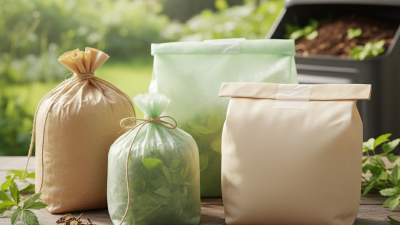
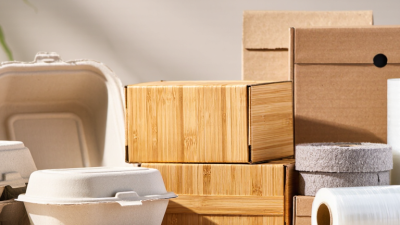
Retail packaging requires protection, presentation, and easy handling. Kraft paper mailers, molded-pulp inserts, and compostable shopping bags can reduce dependence on conventional plastics. Custom-fit inserts protect cosmetics, electronics, and household goods during delivery. Water-based coatings may improve surface resistance, but they can affect recycling or composting conditions. Clear disposal instructions are essential. Industrial packaging demands greater load strength. Starch-based loose fill protects components inside cartons, while molded fiber supports tools, appliances, and spare parts. Heavy machinery may still require reinforced structures or mixed-material protection. This remains a weak point. A reliable manufacturer should provide material specifications, batch records, testing data, and transparent claims about composting conditions. Performance varies between suppliers, even when the material names appear identical.

How to Evaluate Chinese Biodegradable Packaging Suppliers

China Top Biodegradable Packaging Materials Manufacturers

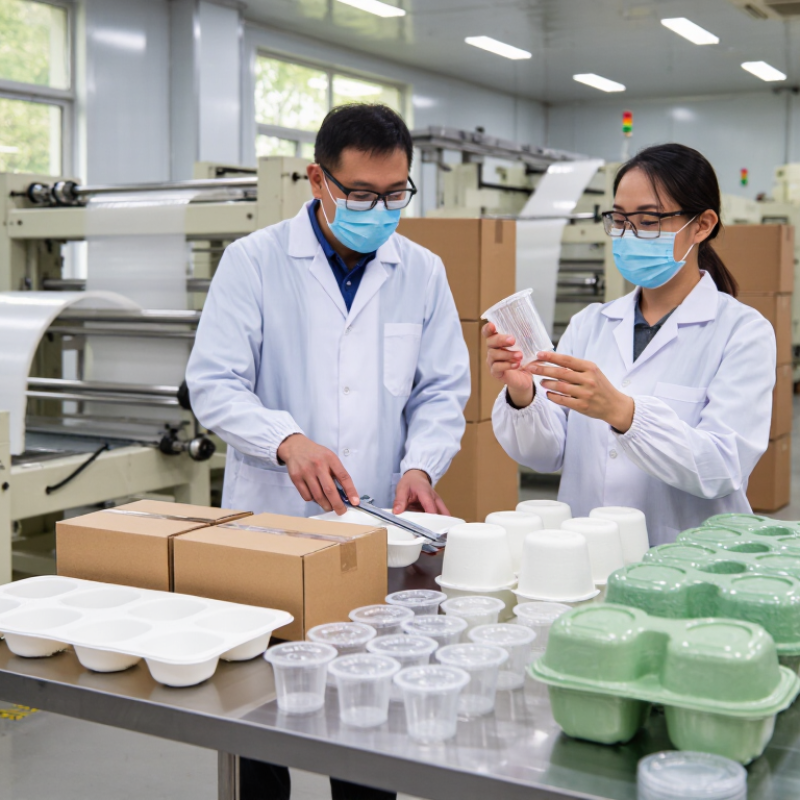
Evaluating Chinese biodegradable packaging suppliers requires more than checking product photos. A polished website proves little. Request material specifications, factory addresses, production capacity, and recent test reports. Check whether the reports match the exact product, thickness, and intended use. Certificates should be current, traceable, and issued by independent laboratories. Ask how the supplier controls raw material batches and prevents unwanted mixing during production.

Tips: Order samples from different production dates. Test seal strength, moisture resistance, odor, and composting performance. Ask for a small trial order before signing a large contract. Compare the sample with the final shipment. Small differences matter.

A reliable supplier explains limitations clearly. They should discuss temperature ranges, storage conditions, shelf life, and disposal requirements. Ask whether their biodegradable claim depends on industrial composting or home conditions. These environments are not the same. Factory audits can reveal basic details, such as clean storage areas, calibrated equipment, and documented inspections. Video calls help, but they cannot replace physical verification. I have learned that delivery promises also need evidence, including production schedules and backup plans. No supplier is perfect. One missed question can become a costly delay. Use written specifications, agreed inspection points, and measurable acceptance standards. Value transparent answers over impressive language.