2026 Top Chocolate Boxes Packaging Suppliers for Buyers

Chocolate can arrive as a gift, a retail product, or a fragile assortment of filled pieces. The right box must protect it and present it well. For buyers comparing 2026 suppliers, chocolate boxes packaging is more than a print-and-price decision. Board strength, food-contact suitability, inserts, coatings, and transport performance all matter. Small details count. A divider that shifts during delivery can scuff delicate shells; a lid that fits poorly can weaken the whole presentation.

Packaging educator Walter Soroka’s definition offers a useful starting point: “Packaging is the science, art, and technology of enclosing or protecting products for distribution, storage, sale, and use.” This guide applies that principle to supplier selection. It examines material options, customization, sampling, production capacity, lead times, and quality controls. Buyers should request physical samples and confirm specifications in writing. Ask how suppliers test box strength and manage color consistency across repeat orders. Verify food-contact documentation for the intended market and product; requirements differ by destination. Sustainability claims deserve the same scrutiny. Request supporting material details rather than relying on broad labels. A lower unit price may not mean lower total cost. Freight, setup charges, minimum order quantities, and damage rates can change the calculation. No checklist replaces a careful sample review. Suppliers vary, and even a well-made box may not suit every chocolate format. The sections ahead help buyers compare options with clearer questions and fewer assumptions.
2026 Top Chocolate Boxes Packaging Suppliers for Buyers

What Chocolate Box Packaging Suppliers Provide in 2026

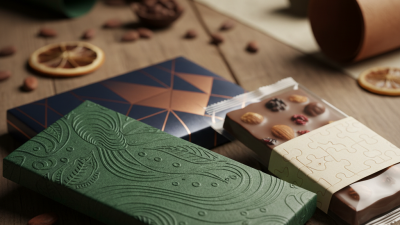
In 2026, chocolate box packaging suppliers provide more than cartons. Buyers can request structural design, food-contact material documentation, printed samples, protective inserts, and production-ready specifications. A supplier may test whether a box keeps pralines from shifting during delivery, while checking that ribbons, windows, and coatings do not complicate packing. The sample matters. Ask to handle a filled box, not just a flat proof.

Material choices are changing, but trade-offs remain. PwC’s 2024 Voice of the Consumer Survey reported that respondents were willing to pay an average 9.7% more for sustainably produced or sourced goods. That is a consumer survey, not a guarantee of higher chocolate sales. Suppliers can offer paper-based formats, recycled-content options, and lighter designs, then explain their limits. Recycled fibers may affect shade or surface smoothness. Still, a beautiful box is not automatically a better box.

Tips: Request a sample with your actual chocolates, plus written details on board weight, insert fit, and food-contact suitability. Compare packing speed as well as appearance. Ask for a small trial run before committing to a large order; colors can shift slightly between proof and production, and that detail is easy to overlook.

Which Box Styles and Materials Suit Different Chocolate Products

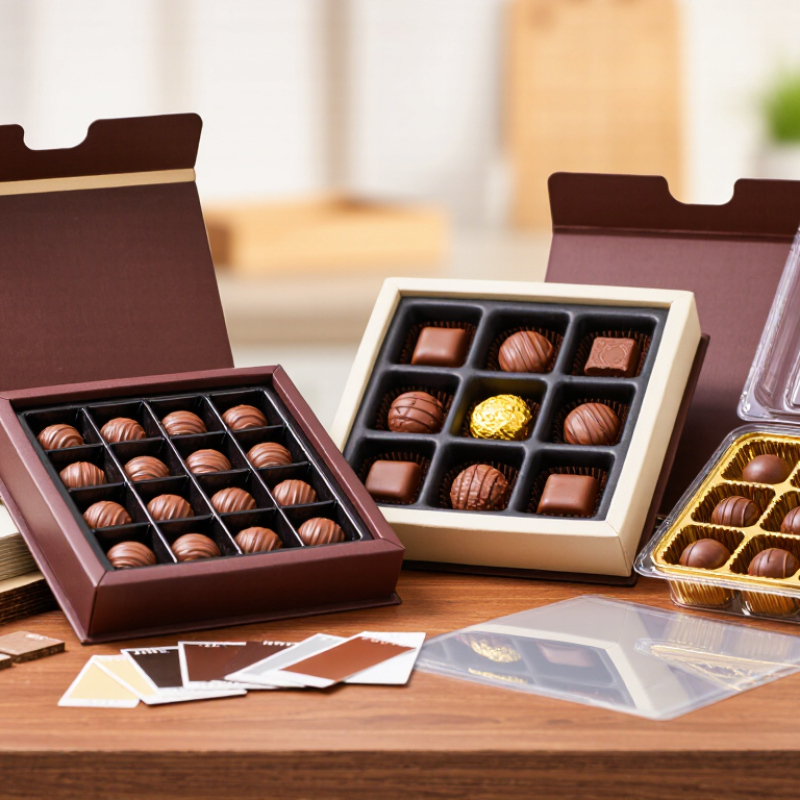
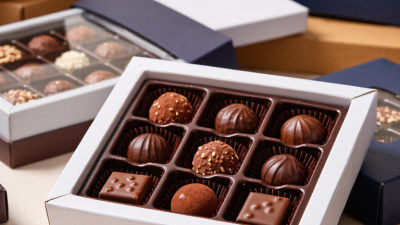
For molded chocolates, pralines, and filled bonbons, choose a rigid folding carton with a fitted insert. It keeps pieces from knocking together during delivery. A shallow tray also makes each shape visible. Nice, but not always practical. Tall truffles need deeper cavities, while delicate shells benefit from snug, food-contact-safe liners. Ask suppliers to test the insert with the actual product; a sample filled with empty molds proves little.

Chocolate bars and tasting squares suit slim paperboard sleeves or tuck-end cartons. For warm routes or longer storage, add a suitable inner barrier to limit moisture, odor, and fat migration. Paper alone may not protect chocolate well enough. OECD’s Global Plastics Outlook reports that packaging accounted for 40% of global plastic waste in 2019, making material reduction worth considering. Yet removing a liner without testing shelf performance can create more waste through damaged goods.

For gift assortments, a rigid setup box with a paperboard divider gives varied pieces room and a clean presentation. Match box depth to the tallest chocolate; excess space lets pieces shift. Eurostat reported 186.5 kilograms of packaging waste per EU resident in 2022. That figure covers all packaging, not chocolate boxes, but it underlines the value of right-sized formats. Recyclability also depends on local collection systems, coatings, and mixed materials. Check those details before choosing a “paper” box.

2026 Top Chocolate Boxes Packaging Suppliers for Buyers - Which Box Styles and Materials Suit Different Chocolate Products

Box Style Common Materials Best Suited Chocolate Products Protection and Presentation Buyer Considerations
Folding Carton with Insert Folding boxboard or solid bleached sulfate paperboard; paperboard or molded-fiber insert Chocolate bars, small assortments, individually wrapped pralines Lightweight and easy to print. An insert helps separate pieces and limit movement, but the carton alone offers limited cushioning during shipping. Check board weight, insert fit, closure style, and whether an inner wrapper or barrier is needed to protect chocolate from moisture, odors, and handling.
Rigid Setup Box with Compartments Rigid paperboard wrapped with printed or decorative paper; paperboard or food-contact-suitable inserts Gift assortments, filled chocolates, truffles, and premium seasonal collections Sturdy construction and a structured presentation. Individual compartments can help keep pieces separated, though the box is generally bulkier than a folding carton. Confirm compartment dimensions, lid fit, storage and shipping volume, and any food-contact requirements for components that touch unwrapped chocolate.
Corrugated Mailer or Shipping Box Corrugated fiberboard, often combined with a folding carton, paper cushioning, or fitted insert Online orders, multi-box assortments, and chocolate products shipped with suitable temperature controls Provides more impact protection than a thin carton when correctly sized and packed. Corrugated packaging does not by itself prevent melting or temperature-related damage. Test the complete packed shipment for movement and impact. Consider route, season, transit time, insulation needs, and protective inner packaging.
Bar Sleeve or Slim Carton Paperboard sleeve or folding carton around a wrapped chocolate bar Single chocolate bars, tasting bars, and small retail formats Uses relatively little material and gives a broad print area. The primary wrapper, rather than the sleeve, usually provides the direct product barrier. Match the sleeve dimensions to the wrapped bar and check that edges, folds, and closures stay secure in display and transit.
Window Carton Paperboard carton with a clear window film or a suitably designed open-window construction Wrapped pralines, boxed bars, and assortments where product visibility supports display Shows the product without opening the carton. A window may reduce the covered area and does not replace a protective inner wrapper. Check window size, attachment, and local recycling guidance for the combined materials. Keep unwrapped chocolate from contacting non-food-contact window materials.
Paperboard Tray with Outer Sleeve Formed or folded paperboard tray with a printed paperboard sleeve Chocolate clusters, bark pieces, molded shapes, and small gift selections The tray supports the product while the sleeve provides branding space. Protection depends on tray depth, fit, and any separate inner wrap. Check tray stiffness, product clearance, and whether the tray or a liner needs a food-contact-compliant surface.
Reusable Metal Tin Tinplate steel or other coated metal, usually paired with an inner food-contact wrapper or liner Gift assortments, seasonal chocolates, and products intended for reusable packaging A rigid container resists crushing better than a paper carton. A tin is not automatically airtight, and it does not control storage temperature. Verify coating and seam suitability for the intended use, fit the inner packaging to the product, and account for weight, cost, and reuse or recycling options.
Molded-Fiber Insert in a Carton Molded paper fiber insert inside a paperboard carton or rigid box Individually wrapped truffles, shaped chocolates, and fragile assortments Formed cavities can help separate pieces and reduce shifting. Cushioning performance depends on insert design, fiber density, and carton fit. Request a sample with the actual product dimensions. Confirm surface suitability for direct contact if chocolates are unwrapped.

How to Evaluate Quality, Customization, and Sustainability

When comparing chocolate-box suppliers, request physical samples rather than relying on screen images. Check corner folds, lid fit, print alignment, and whether the insert keeps each piece still during handling. Small details matter. Ask for board thickness and relevant food-contact documentation. A glossy finish may look impressive, yet fingerprints or scuffs can show quickly. Judge the box after opening and closing it several times.

Customization is more than choosing a color. Confirm minimum order quantities, dieline support, proofing steps, and the cost of changes after approval. Share exact product dimensions and shipping conditions; a snug display box may fail in a parcel. Ask how seasonal artwork or smaller production runs affect lead times. Clear answers are useful, but written specifications are better. Even careful specifications can miss a real-world snag.

For sustainability, ask what the packaging contains, how components separate, and whether recycled-content claims can be verified. Request current certificates or technical sheets, not just a green label. Compare coatings, windows, and magnets, since mixed materials may complicate local recycling. Using less material can reduce waste, but weak protection may lead to damaged chocolates and replacements. Trade-offs are real. A small pilot order can reveal issues that a polished presentation hides.

How to Compare Pricing, Order Minimums, and Lead Times

When comparing chocolate box suppliers, look beyond the quoted unit price. Request a landed-cost breakdown covering printing, inserts, tooling, samples, freight, and expected production waste. Compare prices at the same quantity and specification: a rigid box with a satin insert is not equivalent to a folding carton with paper padding. Small orders cost more. Check whether setup charges recur on reorders, and ask for prices at several volume tiers. McKinsey’s 2023 packaging study surveyed more than 11,000 consumers across 11 countries, highlighting sustainability as a packaging consideration. Ask suppliers to quote recyclable material options separately, since “eco-friendly” can mean very different things.

Order minimums should match your sales forecast and storage capacity, not just secure a lower unit price. Ask whether the minimum applies per design, size, or print run. For seasonal assortments, confirm if multiple box designs can share one production run. Lead times need equal scrutiny. Request separate estimates for sampling, artwork approval, production, and shipping, then confirm what starts the clock. A supplier’s “four-week lead time” may begin only after final approval. Honestly, a clean spreadsheet can still mislead. Ask for a recent schedule from a comparable order, plus written notice of delays and their causes. Check holiday closures and material availability before approving a launch date.

How to Select and Verify a Supplier for Your Business

A reliable chocolate-box supplier should prove consistency, not just present an attractive sample. Compare board thickness, folding accuracy, print registration, and protective inserts against your product’s weight and shape. Ask for a production sample, written material specifications, lead times, and a clear process for handling defects. One sample is not proof; it shows only one production snapshot. Small details matter.

Smithers’ The Future of Global Packaging to 2028 forecasts the global packaging market will reach about $1.3 trillion by 2028. That scale brings many options, but price alone is a weak filter. Check whether the supplier can trace materials by production lot and provide relevant food-contact documentation for your target market. If a sustainability claim matters, verify the exact paper or board through a valid chain-of-custody record. FSC’s 2023 annual report reported more than 160 million hectares of certified forest, but forest certification alone does not certify a finished box.

Tips: Request a pilot run using your real box dimensions and inserts. Test it after stacking and shipping; corners can crush, and glossy finishes can scuff. Ask for references from comparable orders, then verify timelines and repeat-order quality. A low quote may still be the wrong choice.