Choosing the right chocolate boxes packaging in 2026 requires more than matching colors to a brand logo. The box must protect delicate chocolates, preserve presentation, and support responsible purchasing decisions. A beautiful package is not enough.
In real production, small details often decide success. A rigid paperboard box can prevent dents during delivery. A fitted insert can stop truffles from touching each other. Moisture-resistant materials help protect chocolate from humidity and temperature changes. However, every added layer can increase cost and complicate recycling. The most impressive prototype may not be the most practical choice.
Begin with the chocolate itself. Pralines, bars, and filled bonbons require different levels of protection. Consider product weight, cavity shape, storage conditions, shipping distance, and opening experience. A supplier should provide material specifications, sample testing, and clear food-contact documentation. Confirm relevant requirements in each target market before production.
Test before committing.
Order prototypes and inspect them after stacking, vibration, and temperature changes. Check whether the lid closes smoothly and whether the insert shifts during transport. We once found that a luxurious magnetic closure looked excellent but added unnecessary weight. A simpler sleeve performed better and reduced assembly time. That lesson remains useful: packaging decisions should follow evidence, not assumptions.
This guide explores box structures, materials, printing finishes, sustainability claims, customization, costs, and supplier evaluation. It also considers practical mistakes that are easy to overlook. The goal is dependable chocolate boxes packaging that protects the product, communicates quality, and performs reliably from factory to customer.
2026 How to Choose Chocolate Boxes Packaging?
Define Your Chocolate Box Packaging Needs and Product Requirements
Before choosing chocolate box packaging in 2026, define the product and selling environment clearly. Packaging should protect the chocolate, support presentation, and fit the customer’s buying habits. Start with the product itself. Record each chocolate’s dimensions, weight, shape, filling, and surface finish. Dark chocolate may tolerate warmer conditions, while filled chocolates can soften or lose quality faster. Seasonal products need extra protection during delivery.
Consider the box’s daily use. Will customers carry it by hand, open it repeatedly, or send it as a gift? A rigid structure may improve presentation, but it can increase shipping weight and storage costs. A folding carton saves space, yet it may need stronger internal support. Measure the insert carefully. A loose chocolate can move during transport. A tight insert can damage delicate edges. Small details matter.
I once approved a visually attractive package without checking warehouse stacking height. It looked excellent, but storage became inefficient. That mistake changed our testing process. Request prototypes and test them with real chocolates, not empty samples. Check odor, moisture resistance, closure strength, print quality, and food-contact documentation. Review recyclability and local packaging requirements with qualified professionals. Do not rely only on a supplier’s promise. Test drop resistance, temperature exposure, and opening performance before placing a large order. A perfect design on paper can still fail in transit.
2026 How to Choose Chocolate Boxes Packaging?
Compare Chocolate Box Materials, Formats, and Protective Features
Choosing chocolate packaging starts with the product, not the decoration. Paperboard cartons suit lightweight bars and everyday assortments. Rigid boxes create a premium feel and resist crushing during delivery. Molded pulp offers structure with a natural appearance, but its texture may affect delicate finishes. Metal tins protect well from pressure and moisture, although they add weight and cost.
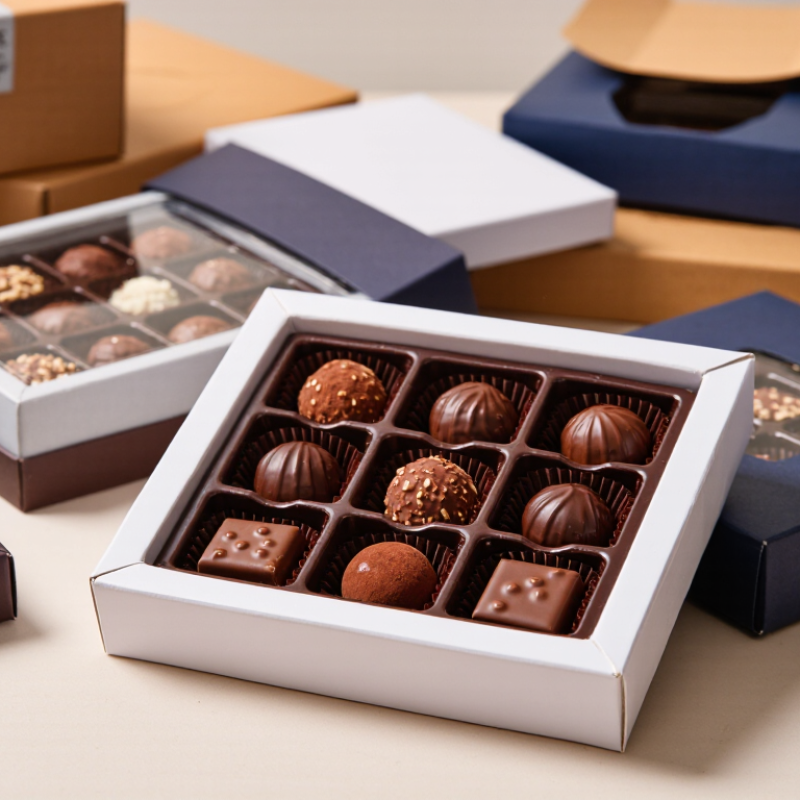
The format also changes the customer experience. Folding cartons store efficiently and suit large production runs. Drawer boxes feel refined and give customers a slower opening experience. Sleeves can refresh a simple inner box without rebuilding the entire package. For fragile pralines, use fitted trays, cavities, or dividers. A loose insert can let chocolates move and lose their clean appearance. I once underestimated this detail during a packaging test. The box looked attractive, but the corners rubbed together.
Tips: Check compression, vibration, humidity, and temperature before approval. Use a moisture barrier when chocolate faces humid storage conditions. Select food-contact materials and verify supplier documentation. Test the complete box, including inserts, seals, and labels. A thin paperboard box may be enough for local delivery. Longer shipping needs stronger board, tighter construction, and better cushioning. Avoid adding protective layers without purpose. Excess material raises cost and may complicate recycling. No format is perfect. Choose the balance your chocolate actually needs.
| Packaging Material | Typical Box Formats | Best Use Case | Moisture and Grease Protection | Impact Protection | Environmental Considerations | Indicative Cost Level | Recommended Protective Features |
|---|---|---|---|---|---|---|---|
| Folding Carton | Chocolate bar sleeve, tuck-end box, small gift carton | Retail bars, seasonal products, lightweight assortments | Moderate; improve with a food-safe coating or an inner wrap | Low to moderate; suitable for products that are already individually wrapped | Paper-based and widely recyclable where local facilities accept it; avoid unnecessary plastic laminates | Low | Reinforced corners, tight tuck closure, inner foil or paper wrapper, moisture-resistant coating |
| Rigid Paperboard | Shoulder box, drawer box, lift-off lid box, premium gift box | Premium assortments, holiday gifts, presentation-focused packaging | Moderate; requires an inner liner or sealed primary pack for stronger protection | High; thick board resists compression and maintains box shape | Often recyclable if made from unlaminated paperboard; magnets, foils, and mixed materials can complicate recycling | Medium–High | Rigid walls, fitted insert, paper shred or molded-pulp cushioning, secure magnetic or tuck closure |
| Corrugated Board | Shipping carton, subscription box, multi-box mailer | Direct-to-consumer delivery and bulk transport | Moderate; use an inner sealed pack when exposed to humidity or melted chocolate risk | High; fluted layers absorb compression and handling shocks | Widely recyclable and commonly made with recycled fiber; keep coatings and mixed components limited | Low–Medium | Appropriate flute grade, snug fit, void fill, tamper-evident tape, insulated liner for temperature-sensitive shipping |
| Paperboard with Foil Lamination | Chocolate bar wrap, inner tray, premium sleeve | Light, oxygen-sensitive, or aroma-sensitive chocolate products | High; foil provides an effective barrier against light, oxygen, and moisture when properly sealed | Low; normally needs a carton or rigid outer box | Mixed-material construction is more difficult to recycle than uncoated paper; verify local recycling requirements | Medium | Full seal coverage, fold-over ends, light barrier, secondary carton, food-contact compliant adhesive |
| Plastic Tray with Paper Carton | Assortment tray, praline box, molded chocolate insert | Individually shaped chocolates and multi-piece assortments | High when paired with a sealed overwrap; the tray itself is not an airtight barrier | High; individual cavities reduce movement and contact between pieces | Material separation may improve sorting; recyclable status depends on the specific plastic and local collection system | Medium | Close-fitting cavities, anti-slip base, sealed film or inner liner, headspace control, crush-resistant carton |
| Molded Pulp | Egg-shaped insert, compartment tray, protective gift insert | Plastic-reduction programs, natural or eco-focused gift sets | Low to moderate unless treated; keep away from direct contact with oily or moist fillings | Moderate to high; molded geometry provides cushioning and separation | Fiber-based and often recyclable or compostable depending on coatings and local facilities | Medium | Deep cavities, stable fit, grease-resistant food-contact liner, outer carton, humidity control during storage |
| Metal Tin | Hinged tin, slip-lid tin, collectible gift tin | Longer shelf-life products, reusable gifts, premium seasonal collections | High when the lid fits tightly; add an inner wrap for aroma and oxygen control | High; strong resistance to crushing and puncture | Steel and aluminum can be recycled through established metal-recovery systems; reuse extends the package life | Medium–High | Friction-fit or hinged lid, internal tray, protective paper liner, corrosion-resistant finish, tamper seal |
| Plastic Box | Clear display box, snap-lock box, compartment container | Visual merchandising, shaped chocolates, impact-sensitive assortments | Moderate to high depending on closure and material thickness; not automatically airtight | High; resists moisture, scuffing, and moderate impact | Recyclability varies by resin type, color, additives, and local collection infrastructure; use one clearly identified polymer where possible | Medium | Secure snap closure, food-safe liner, anti-scratch surface, tamper seal, temperature warning for heat-sensitive products |
| Glass Jar with Paper Sleeve | Wide-mouth jar, gift jar, reusable presentation container | Small chocolate pieces, spreads, premium reusable gift concepts | High with a suitable gasketed lid; protects well against moisture and odors | Low; glass is heavy and breakable during transport | Glass is highly recyclable where collection exists and can be reused; transport weight increases logistics impact | Medium–High | Gasketed closure, molded-pulp divider, individual wrapping, shock-absorbing outer carton, breakage warning |
Note: Performance and cost levels are indicative comparisons for standard packaging configurations. Actual results depend on board grade, coatings, closure design, primary wrapping, storage humidity, temperature, filling type, order volume, and local recycling infrastructure.
Choosing chocolate box packaging in 2026 means testing the customer journey, not only selecting a beautiful color. Branding should be recognizable within three seconds on a crowded shelf or product photo. Use one clear symbol, a controlled palette, and readable type. The box should communicate flavor, occasion, and quality before it is opened. My packaging reviews often begin with a real hand test. Can the sleeve slide off smoothly? Does the lid stay firm? Small failures weaken trust.
Design must support the unboxing experience without making it theatrical or wasteful. A rigid box, soft paper insert, and neatly arranged pieces can create a calm sense of value. Add tactile details, such as a matte surface, embossed pattern, or satisfying closure. Avoid excessive layers. Customers may enjoy a dramatic reveal, but they also notice difficult disposal. A practical package gives clear opening cues and protects each chocolate from movement. I once preferred a visually plain sample because its tray kept every piece aligned. That changed my view.
Evaluate the full sequence with different users: gifting, shipping, and repeat purchase. Record opening time, fingerprints, loose crumbs, and the sound of tearing paper. Then revise the weak points. Do not trust a computer mock-up alone. Physical prototypes expose sharp corners, poor fit, and colors that print darker than expected. Branding should feel consistent across the box, inner card, and delivery label. Still, perfect consistency can become cold. Leave room for a human detail, perhaps a short message or hand-finished texture.
Safe chocolate packaging begins with food-contact control. Ask suppliers for material specifications, migration test reports, and production traceability. The inner surface must resist cocoa butter, moisture, odors, and ink transfer. A box may look clean but still fail under warm warehouse conditions. Check adhesives, coatings, windows, and printing inks separately. Small details matter. Test filled boxes during transport, not only on a showroom table. Inspect crushed corners, loose inserts, and chocolate stains after several days.
Sustainability requires more than choosing paper. Consider recycled content, fiber sourcing, coatings, detachable windows, and end-of-life sorting. Packaging should use only the material needed for protection. Excessive inserts create waste and confuse recycling systems. However, recycled material may need stricter food-contact verification. A thin box can also increase product damage, which creates avoidable waste. That trade-off deserves real testing. Measure packaging weight, shipping protection, and disposal instructions together.
Regulatory compliance depends on the destination market. Confirm applicable food-contact, labeling, chemical, packaging-waste, and extended producer responsibility requirements. Keep supplier declarations, test results, batch records, and artwork approvals in one controlled file. Check allergen statements and storage information carefully. Requirements can change, and a compliant design today may need review tomorrow. Independent laboratory testing adds confidence, but it does not replace supplier oversight. We once treated a sustainability claim as proof; that was too optimistic. Verify every claim with evidence, clear wording, and an audit trail.
Choosing chocolate box packaging in 2026 requires more than comparing unit prices. Supplier reliability matters equally. The 2024 Flexible Packaging Association report valued U.S. flexible packaging shipments at about $42.9 billion in 2023. This scale shows strong capacity, but not every factory offers consistent quality. Request material certificates, production samples, food-contact declarations, and recent quality records. Check how suppliers manage humidity, odor transfer, color variation, and crushed corners.
Cost calculations should include tooling, sampling, freight, finishing, and rejected units. A low quotation can hide expensive setup charges. Custom foil stamping, magnetic closures, rigid board, and special inserts increase labor and material use. Keep the structure practical. A smaller box with a fitted paper insert may protect chocolates better than thick plastic. It may also simplify recycling. Smithers forecasts the global packaging market will exceed 1.2 trillion dollars by 2028, indicating continued investment, but sustainability claims still need evidence.
Production timing depends on approval speed and customization depth. For standard folding cartons, allow roughly three to six weeks after artwork approval. Rigid boxes may require six to ten weeks. Add time for shipping and inspection. My early estimates were too optimistic. Color approval alone caused delays. Ask for a written timeline with prototype, tooling, production, and dispatch dates. Leave a buffer of at least two weeks before seasonal sales. Small changes can become costly. Less decoration is sometimes the wiser choice.
Recommended supplier assessment weights for comparing cost, customization, capability, and production timelines
Use this 100-point framework to compare suppliers consistently: manufacturing capability and total cost receive the highest weight, while customization, production reliability, and quality compliance help confirm whether a supplier can meet the required packaging specification and delivery schedule.