Who Are the Top 10 Wine Bottle Gift Box Suppliers in China?
Who Are the Top 10 Wine Bottle Gift Box Suppliers in China? This guide examines suppliers that turn a fragile glass bottle into a polished, practical gift. A strong box should feel balanced in the hand, hold the bottle securely, and arrive without crushed corners or loose inserts. Appearance matters. So does protection.
Wine chemist Andrew Waterhouse has discussed how oxygen exposure can affect wine quality. That insight points to a basic packaging principle: a gift box must protect its contents, not just decorate them. For this comparison, useful checks include board strength, insert fit, print consistency, customization options, production capacity, and sample quality. Ask suppliers for physical samples. A glossy product photo can hide a poor-fitting insert.
The companies covered here serve different needs, from small customized runs to larger orders with detailed branding. No single supplier will suit every buyer. Rankings can also miss important details; delivery performance and communication may vary between orders. Treat the list as a starting point, then confirm specifications, lead times, and quality expectations directly. Small details matter. A neat magnetic closure, clean foil lettering, or snug neck support can change the unboxing experience. So can a box that looks impressive but is awkward to carry.
What Is a Wine Bottle Gift Box Supplier?
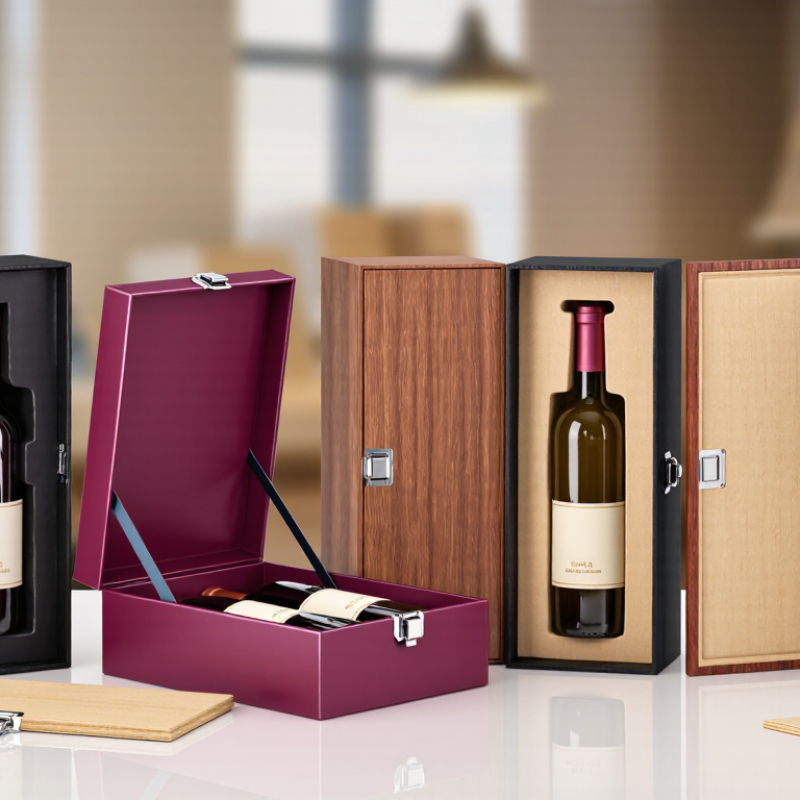
A wine bottle gift box supplier develops, makes, or sources packaging to present and protect bottled wine. It may provide rigid paperboard boxes, folding cartons, sleeves, or fitted inserts. The insert matters: a bottle should sit upright, with little movement when the box is gently tilted. Small details count. Neck clearance, closure depth, and the bottle’s exact diameter affect fit more than a standard size chart suggests. Some suppliers manufacture in-house; others coordinate printing and assembly through partner workshops. A buyer should ask which steps they control.
A capable supplier turns a brief into a sample and confirms dimensions before production. They should also check print color, edge quality, and closure performance against the approved sample. Ask about board thickness, insert material, surface finish, minimum order quantity, and lead time. Request a physical sample. Digital mockups can hide a loose insert or a lid that catches at one corner. In practical sourcing, a polished screen proof can still conceal weak board or a poor fit. That gap is easy to overlook. Even a careful process can miss a small mismatch, so test the sample with the actual bottle before approving production.
How to Assess Suppliers in China
How to Assess Suppliers in China
Assess a wine gift-box supplier through evidence, not catalog photos. Smithers’ global packaging analysis values the sector at roughly US$1 trillion annually, but market size alone says little about one factory’s reliability. Ask whether the supplier manufactures the box or outsources production. Request the board grade, material weight, finished dimensions, and written tolerances. Then compare these details with a physical sample. Looks are not enough.
Test the sample with the actual bottle, including its neck and base. Check whether the insert prevents movement and whether the lid closes without pressure marks. Ask for drop and vibration test records, especially for boxes shipped in cartons. A polished sample can still mislead. Review quality records from recent orders, not just a single showcase piece. If possible, arrange a factory audit or live video walk-through; confirm that the equipment and production line match the supplier’s claims.
Request a quotation that separates box cost, insert, printing, tooling, minimum order quantity, and lead time. Compare like with like: paper thickness, finish, packing method, and shipment terms can change the apparent price. Communication is also measurable. Send one drawing with a small revision, then note how clearly the supplier confirms the change. Some checks feel tedious, and they can miss issues. Still, written specifications make disagreements easier to trace.
Who Are the Top 10 Wine Bottle Gift Box Suppliers in China? — How to Assess Suppliers in China
A practical scorecard for comparing suppliers without relying on brand rankings.
These suggested weights total 100% and are a procurement framework, not measured market results. Compare suppliers using the same requirements, then verify claims with samples, production records, certifications where relevant, and a factory audit.
Ten Notable Wine Bottle Gift Box Suppliers in China
Ten notable Chinese wine bottle gift-box suppliers are best compared by capability, not by unsupported rankings. A useful shortlist should include rigid-board makers, wooden-box workshops, molded-pulp specialists, magnetic-lid converters, and export-focused factories. Compare all ten using the same sample brief. Check insert fit, corner protection, print consistency, minimum order quantity, and production lead time. A neat catalog can still hide a loose insert.
The OIV’s 2024 report estimated global wine production at 237 million hectolitres in 2023, about 10% below 2022. That volatility makes flexible order planning worth checking. McKinsey’s 2020 US packaging survey found that 60–70% of consumers would pay more for sustainable packaging, depending on the category. Ask suppliers for evidence behind recycled-content claims. These figures offer context, not proof that a particular box will sell. I would not rank factories without current samples and verified production information.
Tips: Request a finished sample with the actual bottle, then test fit, closure, and handling. Confirm whether material claims apply to the box, insert, or both.
How Suppliers Differ in Materials, Design, and Services
Wine bottle gift-box suppliers in China vary in board grade, surface finish, inserts, and production support. A rigid paperboard box feels substantial, while corrugated board offers better cushioning for long-distance shipping. Wood adds weight and texture; molded-pulp inserts can hold a bottle firmly without a glossy plastic tray. The right choice depends on bottle shape, shipping route, and budget—not just appearance.
Eurostat reported that paper and cardboard packaging had an 83.2% recycling rate in the EU in 2022. That figure is not a China-specific benchmark, but it shows why buyers increasingly ask about recycled content, coatings, and material separation. A supplier should provide clear material specifications, rather than relying on vague “eco-friendly” claims. Small details matter. Ask for a physical sample and test the fit, closure, and scuff resistance.
Design and service can be just as different. Some factories handle structural sampling and color matching in-house; others outsource printing or rely on standard box dimensions. OIV’s 2023 sector report estimated global wine production at 237 million hectolitres, its lowest level since 1961. For gift packaging, varied bottle formats make adaptable inserts and accurate measurements important. I would not assume a heavier box is automatically more premium; sometimes it is simply harder to ship. Not always. Ask suppliers about prototype timing, minimum order quantities, inspection steps, and replacement terms before comparing quotations.
How to Choose the Right Supplier for Your Needs
Choosing a wine bottle gift box supplier starts with the bottle, not the catalogue. Measure its height, widest point, and neck shape, then ask for a sample insert. A snug fit should hold the bottle upright without forcing it into the box. Check the lid, corners, and handle after carrying the sample. Small flaws matter; a loose insert can make careful packaging feel cheap.
Tips: Request material details, sample lead time, minimum order quantity, and a written quote. Ask how the supplier checks color, print alignment, and box dimensions during production. Compare like with like: paper thickness and inserts can change the price. A low quote may leave out important details.
Clear communication is a useful test. Send a simple specification sheet and see whether the supplier confirms measurements, finish, delivery schedule, and packing method. Ask for photos of a production sample, not only polished catalogue images. If the first sample is nearly right, note what needs adjustment in writing. It may take another round. That extra step can prevent boxes arriving with scuffed edges or inserts that do not fit.
