Choosing a reliable SDIC Disinfectant manufacturer requires more than comparing prices or production capacity. Global buyers need clear product specifications, consistent quality, responsive communication, and evidence of responsible manufacturing. This guide examines leading suppliers through practical purchasing criteria, including active chlorine content, tablet stability, packaging performance, batch testing, and export experience.
A dependable manufacturer should provide technical data sheets, certificates of analysis, safety documentation, and traceable quality records. Buyers should also confirm whether the supplier follows recognized management systems and meets the regulations of the destination market. A factory tour, independent laboratory test, or sample order can reveal details that marketing materials often miss. Small details matter. A damaged container can affect product performance during long ocean transport.
The manufacturers discussed here serve different buyer needs. Some focus on high-volume industrial orders, while others offer flexible packaging for distributors, hotels, farms, or water-treatment companies. Experience suggests that the largest supplier is not always the safest choice. Communication delays, unclear lead times, and weak after-sales support can create costly problems. This point deserves reflection.
The guide does not present one universal winner. Regional regulations, shipping conditions, application requirements, and budget limits shape every decision. Buyers should verify current certificates and product claims directly with each manufacturer. Independent checks remain valuable, even when a supplier appears highly reputable. Careful evaluation supports safer procurement, steadier supply, and more reliable long-term partnerships in the global SDIC Disinfectant market.
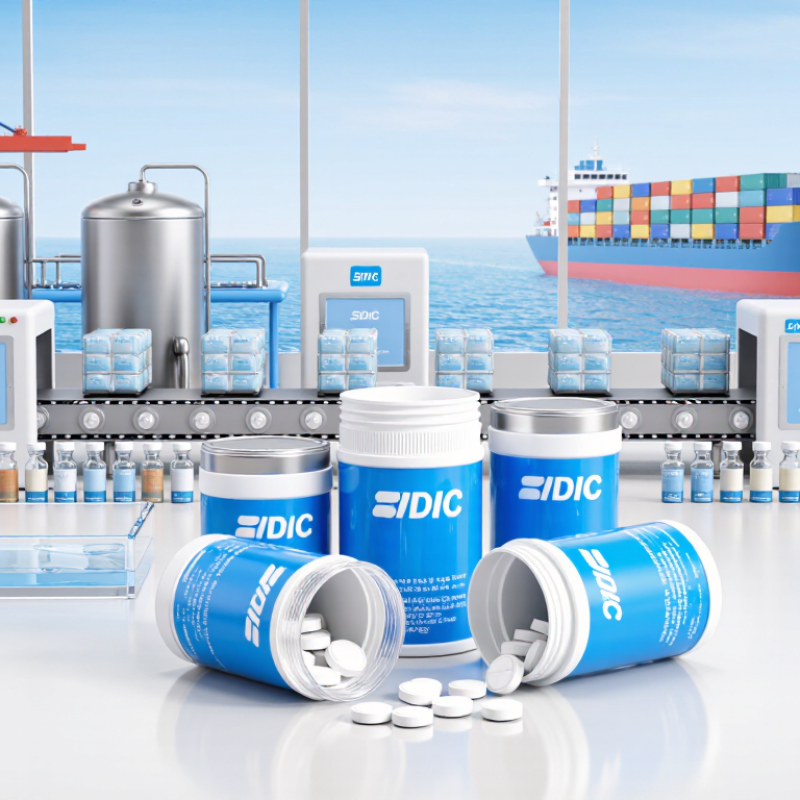
SDIC, or sodium dichloroisocyanurate, is a stabilized chlorine donor used in water treatment and surface sanitation. Available chlorine measures oxidizing capacity, not total chemical mass. Products labeled 56% commonly contain the dihydrate form, while 60% grades are often anhydrous. Actual values depend on assay methods, moisture, and storage conditions. That distinction matters when global buyers compare manufacturers, quotations, and dosing calculations. More is not automatically better.
Strong production controls should include raw-material checks, controlled drying, uniform granulation, and sealed moisture-resistant packaging. Ask for a recent certificate of analysis, SDS, batch number, production date, and available-chlorine test method. Reliable suppliers should explain dissolution behavior, impurity limits, and transport stability without vague promises. Some buyers focus only on the percentage. That is understandable, but incomplete. Field performance can suffer when tablets crumble, moisture enters containers, or products age in heat. Independent testing is sensible for large orders, especially when water chemistry changes between sites.
Tips: Compare like with like. A 56% dihydrate grade and a 60% anhydrous grade are not interchangeable by weight. Confirm pH, moisture, particle size, and packaging before signing. Store containers in a cool, dry, ventilated area, away from acids and incompatible materials. Never blend chemicals casually. Follow the supplier’s safety data and applicable local requirements. A careful buyer may still miss one detail; reviewing the evidence twice is worthwhile.
Top SDIC manufacturers should be ranked through evidence, not production claims. Capacity is the first filter. Public industry estimates place the global water treatment chemicals market near US$40 billion in 2024, but SDIC represents only one segment. Buyers should request audited annual output, reactor capacity, batch records, and three-year utilization data. A large site can still deliver inconsistent granule size.
Certifications separate credible suppliers from ordinary exporters. Facilities with ISO 9001, ISO 14001, and third-party product testing deserve higher scores. Export documents should match the actual production site. The WHO Guidelines for Drinking-water Quality recognize chlorine-based disinfection as effective when dose, contact time, and residual levels are controlled. That makes laboratory verification essential, especially for swimming pools and municipal systems. Certificates alone are not enough.
Export reach completes the ranking. UN Comtrade shipment data can reveal destination diversity, shipment frequency, and dependence on one market. A stronger manufacturer serves multiple regions and maintains local regulatory files, multilingual labels, and stable packaging. Check pallets, moisture barriers, and container loading photos. Those details matter. Capacity should receive 40% of the score, certifications 30%, and export reach 30%. This weighting is practical, though imperfect. Trade records may combine SDIC with other chemical categories under broad customs codes. Buyers should therefore cross-check customs data with factory audits, test reports, and recent bills of lading.
Comparable SDIC product and export-compliance benchmarks for supplier evaluation, without displaying company or brand data.
Anhydrous SDIC commonly contains approximately 60–64% available chlorine, while the dihydrate form commonly contains approximately 55–57%. SDIC is internationally classified under UN 2465 and oxidizer hazard class 5.1. Global buyers should verify production capacity, ISO quality systems, SDS and COA documentation, regulatory compliance, packaging performance, and export experience directly with each supplier.
Global buyers should judge SDIC manufacturers through documented controls, not attractive product claims. The WHO and UNICEF Joint Monitoring Programme reported that 2.2 billion people lacked safely managed drinking water in 2022. Reliable disinfection therefore needs stable purity, traceable batches, and practical handling instructions. ISO 9001 certification indicates a controlled quality system, but it does not prove every batch is perfect. Experience shows that supplier audits, retained samples, and complaint records reveal more than a certificate alone.
For products used in drinking-water treatment, NSF/ANSI 60 is especially relevant because it evaluates chemicals that may contact potable water. It is not a general quality badge. The WHO Guidelines for Drinking-water Quality also emphasize controlling disinfectant by-products, so dosage guidance matters.
Tips: Request an ISO 9001 certificate number and audit scope. Check its expiry date. Compare SDS revision dates with the shipped formulation. Ask for recent certificates of analysis, impurity limits, and packaging photographs. One weakness remains: public documents can look complete while factory controls vary. An independent laboratory check is still worthwhile.
For global buyers, SDIC disinfectant selection should begin with product format, not price. Sodium dichloroisocyanurate tablets offer measured dosing and clean handling. They suit water-treatment systems, sanitation containers, and routine facility maintenance. Tablet hardness affects dissolution speed. A slow tablet may support longer contact time, while a fast tablet works better for quick treatment.
Granules dissolve more rapidly and allow flexible dosing. Operators can adjust quantities for different water volumes or contamination levels. Granules are useful for municipal treatment, industrial cleaning, and emergency sanitation procedures. However, dust control matters during handling. Clear labeling, protective equipment, and good ventilation remain essential. Buyers should request active-chlorine specifications, dissolution data, and batch test reports before purchase.
50-kg packaging supports high-volume distribution and reduces repeated handling. It also creates storage responsibilities. Moisture can weaken product performance, especially after repeated opening. Strong inner liners, sealed bags, pallets, and dry warehouses help protect quality. Experienced suppliers should provide a certificate of analysis, production date, shelf-life guidance, and transport instructions. Packaging alone does not prove reliability. I have found that small differences in particle size can affect field results, so trial testing is still worthwhile. Performance may vary with water temperature, pH, and organic load. A product that performs well in one site may need adjustment elsewhere.
| Product Format | Typical SDIC Content | Available Chlorine | Typical Product Size | Dissolution Behavior | Primary Applications | Common Bulk Packaging | Key Purchasing Considerations |
|---|---|---|---|---|---|---|---|
| Effervescent Tablets | Typically 50%–60% SDIC dihydrate or equivalent formulation | Approximately 55%–60% | Commonly 1 g, 3.3 g, 5 g, 10 g, 20 g, 50 g, or 200 g tablets | Designed for controlled dosing; dissolution time depends on tablet weight, compression force, water temperature, and formulation | Swimming pools, spas, drinking-water treatment, emergency water disinfection, and institutional sanitation | Polyethylene-lined fiber drums, plastic drums, cartons, or smaller inner containers packed into export cartons | Check tablet hardness, friability, dissolution time, moisture protection, and compatibility with automatic dosing systems |
| Slow-Dissolving Tablets | Typically 50%–60% SDIC-based active ingredient | Approximately 55%–60% | Often 20 g, 50 g, 100 g, or 200 g tablets | Slower release than small effervescent tablets; actual release rate varies with tablet density, water flow, and temperature | Pool skimmers, floating dispensers, water tanks, and continuous chlorination systems | Moisture-resistant drums, lined fiber containers, or sealed plastic packaging placed in outer cartons | Evaluate release consistency, tablet integrity during transport, chlorine stability, and storage-life documentation |
| Granules | Typically 50%–60% SDIC-based formulation | Approximately 55%–60% | Fine, medium, or coarse granules; particle size is formulation-dependent | Generally dissolves faster than large tablets because of greater surface area; undissolved residue depends on water quality and product purity | Rapid shock treatment, swimming pools, industrial water systems, agricultural sanitation, and surface disinfection | Plastic-lined fiber drums, HDPE drums, woven bags with inner liners, or 50-kg moisture-resistant sacks | Confirm particle-size distribution, flowability, dust generation, caking resistance, and active-chlorine uniformity |
| 50-kg Bulk Packaging | May contain tablets or granules; concentration should be specified on the technical data sheet | Usually about 55%–60% for standard SDIC products | Packaging unit rather than a product size; net weight is typically 50 kg | Depends on whether the contents are tablets or granules and on the inner moisture barrier | Industrial water treatment, municipal or commercial sanitation, pool-service distribution, and contract manufacturing | Commonly a fiber drum, HDPE drum, or woven polypropylene bag with a sealed polyethylene inner liner | Verify net weight, liner material, pallet configuration, container loading plan, UN transport classification, and local import requirements |
| Fine-Particle Granules | Typically 50%–60% SDIC-based active ingredient | Approximately 55%–60% | Fine granulation with a relatively high surface area | Fast dissolution when properly dispersed; dust control and moisture protection are important during handling | Rapid preparation of disinfectant solutions, healthcare support areas, food-processing sanitation, and institutional cleaning | Sealed inner bags inside fiber drums, plastic drums, or multiwall bags | Request dust-control data, dissolution testing, bulk density, and handling instructions before large-volume purchase |
| Coarse Granules | Typically 50%–60% SDIC-based active ingredient | Approximately 55%–60% | Coarser particles selected for easier handling and reduced dusting | Usually slower to dissolve than fine granules but easier to measure and handle in bulk operations | Large pools, water storage tanks, industrial circulation systems, and routine maintenance dosing | 50-kg lined bags, drums, or fiber containers with secondary moisture protection | Compare granule size, dissolution time, caking tendency, manual-dosing convenience, and warehouse requirements |
| Export-Ready SDIC Supply | Product specification should state SDIC assay, moisture, insoluble matter, and available chlorine | Common commercial range: about 55%–60% | Tablets or granules supplied in retail, commercial, or 50-kg bulk units | Performance depends on active ingredient, formulation aids, packaging quality, and exposure to humidity | International distribution, private-label conversion, commercial sanitation, and industrial treatment programs | Moisture-resistant primary packaging, export cartons or drums, pallets, and container-safe load plans | Request a certificate of analysis, safety data sheet, batch traceability, production date, shelf-life statement, and transport documentation |
For global buyers, SDIC disinfectant quality begins with measurable control, not attractive packaging. Assay testing confirms the active chlorine content against the stated specification. A reliable manufacturer tests representative samples from each batch. The result should match the certificate of analysis and production records. Small differences deserve investigation.
Moisture testing is equally important. Excess water can reduce stability and cause caking during storage. A practical check uses a calibrated moisture analyzer, with results recorded before shipment. pH testing should follow a defined concentration and temperature. Otherwise, two laboratories may report different values. Dissolution testing shows how quickly the product disperses in water. Clear preparation, limited residue, and repeatable timing are useful observations.
Experienced quality teams combine laboratory data with visual inspection and traceability. They retain reference samples and verify instruments regularly. Independent laboratory checks can strengthen buyer confidence. Still, no single result proves complete product reliability. Sampling errors happen, especially when drums are handled too quickly. That weakness should be documented and corrected. Buyers should request test methods, acceptance limits, batch numbers, and retest procedures. Clear records make supplier comparisons more practical. Good control is sometimes less impressive than a perfect-looking certificate.