What is PET Release Film and How Does it Work?
PET Release Film is a specialized product widely used in various industries. It serves as a protective layer or a separating medium for adhesives, coatings, and other materials. This film is important for ensuring a smooth application process. Its unique properties allow for easy release from bonded surfaces, which helps in maintaining product integrity.
Many professionals rely on PET Release Film for efficient manufacturing processes. It is crucial in sectors like packaging, electronics, and textiles. The film is often chosen for its durability and ability to withstand various environmental conditions. However, not all PET Release Films are created equal. Variations in thickness and surface treatments can impact their performance.
Understanding how PET Release Film works involves recognizing its composition and treatment methods. This knowledge is essential for selecting the right type for specific applications. Some users find it challenging to determine the best options available. This article will explore the mechanisms behind PET Release Film and its practical uses in real-world situations.
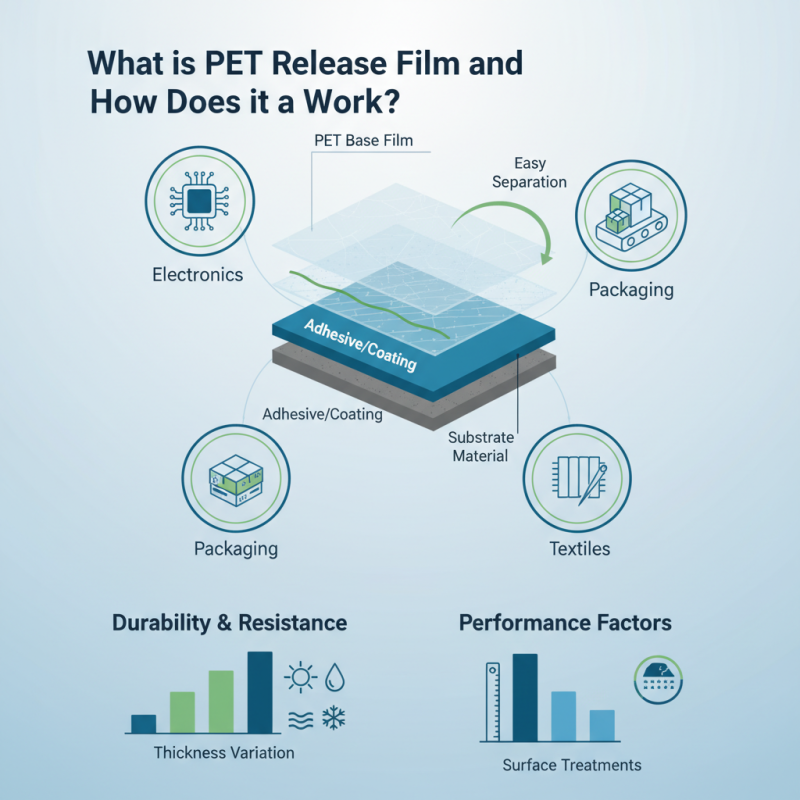
What is PET Release Film?
PET release film is a specialized material widely used in various industries. It consists of a polyester substrate coated with a silicone layer. This unique combination allows for easy release of adhesives, making it ideal for use in applications such as labels, tapes, and electronic components.
One key advantage of PET release film is its ability to withstand high temperatures. This property makes it suitable for processes like laminating and encapsulation. Additionally, the film is tear-resistant, ensuring durability during handling. However, not all PET release films are created equal. Some may lack the necessary coating thickness or uniformity, leading to inconsistent release properties.
In practice, choosing the right film can be tricky. Users must consider factors like base material and intended application. It's essential to test different films to find the best match for a specific task. While many find success with PET release film, some may encounter unexpected issues during production. Addressing these challenges requires careful monitoring and adjustments to ensure optimal performance.
The Composition and Structure of PET Release Film
PET release film is an essential material used in various industries. Its composition primarily includes polyethylene terephthalate (PET), which is a thermoplastic polymer. This material is known for its durability and flexibility. It provides a smooth surface that allows for easy release of products, making it ideal for applications such as adhesive films and lamination.
In terms of structure, PET release films often feature a specific coating that enhances their functionality. This coating helps to prevent adhesion to the surfaces it is in contact with. The film’s thickness can vary, influencing both its mechanical properties and its release characteristics. When produced, careful attention is given to the alignment of molecules within the polymer. This affects how the film performs during its intended use, highlighting the importance of optimal production processes.
While PET release films are widely used, challenges can arise. Some films may not perform consistently under different environmental conditions. Factors such as temperature fluctuations can impact their effectiveness. Additionally, ensuring a uniform coating on the film is crucial. Any discrepancies can lead to poor release performance. These imperfections serve as reminders of the importance of meticulous quality control in manufacturing processes.
The Application Areas of PET Release Film
PET release film is widely used across various industries, showcasing its versatility and reliability. One prominent application area is in the production of self-adhesive labels and tapes. The film acts as a liner, preventing premature adhesion. Its smooth surface ensures easy handling and precise lamination.
Another significant use of PET release film is in the composite materials sector. It serves as a release agent when molding materials like fiberglass. This application enhances efficiency, ensuring that components can be easily removed post-molding without damage.
In the electronics industry, PET release film is vital for producing printed circuit boards. It provides insulation and protects delicate surfaces during assembly. Despite these advantages, users must consider environmental impacts. Recycling and disposal practices remain critical challenges that require ongoing attention. This industry needs to explore sustainable alternatives to ensure a responsible future.
How PET Release Film Works in Various Industries
PET release film plays a vital role in several industries. Its main function is to provide a non-stick surface for various applications. The film is designed to release easily from adhesives, coatings, and other materials without leaving residues. This characteristic makes it essential in sectors like packaging, graphic arts, and automotive manufacturing.
In the packaging industry, PET release film is commonly used with pressure-sensitive adhesives. According to a report by Smithers Pira, the global market for release liners is expected to reach $3 billion by 2024, highlighting the growing demand for materials that enhance product longevity and functionality. The film supports efficient production processes, minimizing waste and improving overall quality.
In the graphic arts sector, PET film is utilized as a protective layer for self-adhesive labels. The film ensures clean and smooth application, critical for high-quality prints. Additionally, in automotive manufacturing, it serves as a surface protector during the painting process. Improper film application can lead to defects, showcasing the need for precision and expertise in its usage. Effectively, PET release film is not just a component; it’s integral to product integrity across various applications.
Benefits of Using PET Release Film in Manufacturing Processes
PET release film offers significant advantages in manufacturing. It provides a smooth surface that prevents materials from sticking together. This characteristic is crucial when creating laminates or applying films. Manufacturers can easily separate various layers, enhancing production efficiency.
Moreover, PET release film is lightweight and durable. It withstands various environmental factors, making it suitable for diverse applications. This versatility benefits sectors ranging from automotive to electronics. However, some may overlook its importance. Proper selection is vital to ensure optimal performance.
Using PET release film can improve quality while reducing waste. By minimizing adhesive issues, manufacturers save time and resources. Yet, it is essential to assess the compatibility with specific processes. This reflection helps avoid mishaps and enhances overall production outcomes.
Benefits of Using PET Release Film in Manufacturing Processes
