How to Choose Biodegradable Packaging for Your Products?
Choosing biodegradable packaging requires more than replacing plastic with a greener-looking material. The package must protect your product, survive transport, and fit realistic disposal systems. A coffee pouch, for example, may face heat, moisture, crushing, and long warehouse storage. A material that decomposes quickly can still fail if it loses strength too early.
Industry data shows why careful selection matters. European Bioplastics reported that global bioplastics production capacity could rise from approximately 2.18 million tonnes in 2023 to 7.43 million tonnes by 2028. However, growth does not guarantee proper disposal. UNEP’s 2023 “Turning off the Tap” report states that global plastic pollution could be reduced by 80% by 2040 through system-wide changes, including reuse, better design, and improved waste management. Biodegradable packaging is only one part of that solution.
The label alone is not enough. Check whether the product meets recognized standards, such as EN 13432, ASTM D6400, or ISO 17088, where applicable. Then confirm whether nearby facilities accept that specific material. Industrially compostable packaging may not break down in a backyard compost pile. That detail is often missed.
Dame Ellen MacArthur, a leading circular-economy authority, states, “A circular economy is based on the principles of designing out waste and pollution, keeping products and materials in use, and regenerating natural systems.” Her point challenges a convenient assumption: biodegradable does not automatically mean sustainable. A responsible choice compares material sourcing, carbon impacts, product protection, certification, and end-of-life infrastructure. The perfect option may not exist. Still, better evidence produces better packaging decisions.
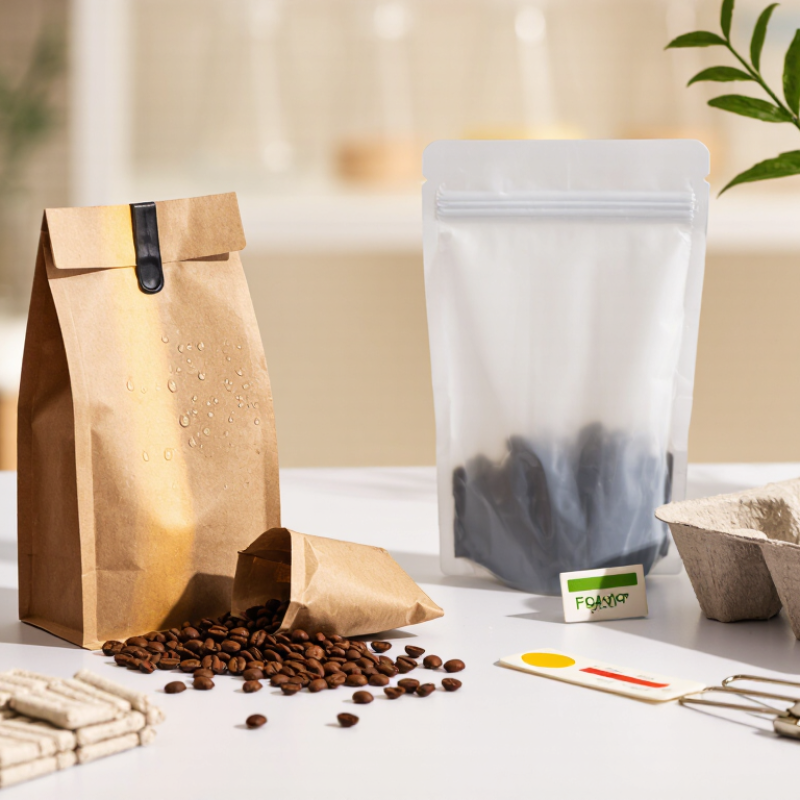
Define Your Product’s Packaging Requirements
Choosing biodegradable packaging
starts with defining what your product actually needs. A dry snack may only require a light pouch, while a moist product needs stronger moisture resistance. Record the product’s weight, shape, shelf life, and storage temperature. Note how it moves through warehouses, delivery vehicles, and customer homes.
In practical packaging trials, small details often decide success. A narrow neck can slow filling, and a weak seal can expose contents to air. Test the package when empty and fully loaded. Drop it from a realistic handling height. Check for leaks, crushing, odor transfer, and label adhesion. Also ask whether local facilities can process the chosen material. “Biodegradable” does not always mean it breaks down in ordinary household conditions. Request clear test data, disposal guidance, and material specifications from suppliers. Do not rely on a vague environmental claim.
Tips:
Create a simple requirement sheet before comparing materials. Include dimensions, maximum product weight, barrier needs, seal type, print area, and expected transport time. Keep one filled sample for weekly inspection. Photograph damage patterns. This makes supplier discussions more precise. It also reveals overlooked problems. A material may look ideal during a desk review, yet fail after humidity exposure. I have learned that packaging decisions improve through repeated testing, not confident assumptions. Some requirements may change after the first trial. That is acceptable, but record why.
Compare Biodegradable Materials and Their Properties
Choosing biodegradable packaging starts with material behavior, not marketing language. PLA offers clear presentation and good stiffness, but it usually needs controlled industrial composting. PHA can biodegrade in more environments, yet its higher cost and limited supply may affect large orders. Starch-based films are flexible and compostable, but humidity can weaken them. Molded fiber handles dry goods well, although oils and liquids often require barrier coatings.
The European Bioplastics and nova-Institute 2024 market data report estimates global bioplastic production capacity at 1.74 million tonnes in 2024. Packaging represents about 54% of that capacity. This growth sounds impressive, but collection systems remain uneven. UNEP’s 2023 report states that plastic pollution could fall by 80% by 2040 through reuse, recycling, and material reduction. Therefore, a compostable package may fail if no suitable facility accepts it. That uncomfortable detail matters.
Tips: Test the package with real humidity, temperature, filling weight, and transport vibration. Check whether the material needs industrial composting. Ask waste operators for written acceptance details. Choose molded fiber for dry products, PLA for clear short-life packs, and starch films only after moisture testing. I have seen attractive samples curl beside a warm warehouse window. Lab results can mislead. Also compare barrier performance, shelf life, printing layers, and disposal instructions before selecting a material. Data from one controlled test is not enough.
How to Choose Biodegradable Packaging for Your Products?
Typical comparison of biodegradable packaging materials under controlled conditions. Tensile strength values are approximate midpoints of common reported ranges, while composting time refers to industrial composting environments and can vary with thickness, temperature, moisture, and certification requirements.
PLA generally offers higher stiffness and strength but usually requires industrial composting. PHA and starch-based materials can biodegrade more readily in suitable environments, while cellulose films provide good renewable-content and compostability potential.
Assess Certifications, Safety, and Environmental Claims
Choosing biodegradable packaging requires more than reading a green claim. Ask what “biodegradable” means, and under which conditions. EN 13432, ASTM D6400, and ISO 17088 testing can support industrial compostability claims. However, these standards do not guarantee breakdown in a backyard compost bin, soil, or seawater. Check the certificate’s scope, material thickness, additives, inks, and required temperature.
Safety deserves equal attention. For food packaging, request food-contact declarations and migration-test results for the finished product. The adhesive and printing ink matter too. A compliant film can become unsuitable after conversion. Packaging should also protect products from moisture, oxygen, heat, and contamination. A failed package creates waste, even when its material sounds sustainable.
Environmental claims should be measurable and specific. The OECD’s Global Plastics Outlook reported 353 million tonnes of plastic waste in 2019, while only 9% was recycled. That figure makes credible disposal guidance essential. State whether customers need a commercial composting facility, and confirm local collection access. Avoid vague phrases such as “eco-friendly” or “zero impact.” I would also question claims based only on laboratory results. Real disposal systems are messier. A package may pass testing but still reach landfill. That uncomfortable gap should appear in the product instructions, not remain hidden.
Evaluate Performance, Cost, and Supply Chain Fit
Choosing biodegradable packaging starts with product protection, not appearance. In a trial, a pouch that looked sturdy softened after two days in humid storage. That failure exposed a common mistake: testing only in dry rooms. Measure compression, puncture resistance, seal strength, and moisture performance with your actual product. Use samples from production-scale runs, not polished prototypes. Ask an independent laboratory to verify relevant claims and test results. Short claims can mislead.
Cost includes more than unit price. Compare packaging weight, filling speed, storage space, damage rates, and disposal requirements. A lower-priced material may need thicker walls or extra protective layers. That can erase the saving. Request a full quotation with tooling, minimum order quantities, freight, and inspection fees. Run a small pilot before committing to annual volume. It may feel inefficient. It can prevent expensive inventory.
Supply chain fit depends on reliable inputs and realistic lead times. Check whether the material is made locally or shipped across several borders. Review seasonal capacity, backup suppliers, and batch consistency. Ask how the packaging should be stored before use. Some fibers absorb moisture quickly. Set clear acceptance limits for color, thickness, odor, and seal performance. Track results across several deliveries. One successful shipment proves little. If performance, cost, and availability conflict, adjust the product format or order cycle rather than forcing a fragile package into production.
Select, Test, and Improve the Final Packaging Solution
How to Choose Biodegradable Packaging for Your Products?
Select materials against the product, not the marketing claim. The OECD Global Plastics Outlook reports that packaging created 40% of global plastic waste in 2019. That figure makes material choices important, but “biodegradable” is not a complete specification. Check the required environment, temperature, moisture, and disposal route. A film designed for industrial composting may fail in a home compost bin. Request certification evidence, migration data, and clear disposal instructions from suppliers. Then compare barrier performance with recycled or recyclable alternatives through a practical life-cycle review.
Test the package with the actual product. Measure seal strength, puncture resistance, oxygen transmission, and moisture protection. Drop filled cartons from realistic warehouse heights. Store samples beside a sunny window and in humid conditions. Small trials matter. The results may expose weak seals or unpleasant odors. ASTM D6400 or EN 13432 testing can support industrial compostability claims, but certification does not guarantee local processing access. UNEP’s Turning off the Tap report indicates that major plastic pollution reductions require better design, reuse, recycling, and material substitution together.
Improve the solution in short cycles. Change one feature at a time, such as coating thickness, closure design, or package size. Record damage rates, product freshness, customer handling, and disposal behavior. A thinner pouch may reduce material use but tear during delivery. We once favored a compostable structure too quickly. Its moisture barrier looked acceptable in the laboratory, yet failed after repeated opening. That mistake remains useful. Final approval should combine test data, supplier documentation, field feedback, and honest disposal instructions.