How to Buy Tripotassium Phosphate from Reliable Suppliers?
Buying Tripotassium Phosphate requires more than comparing prices on a supplier’s website. This white crystalline powder is commonly identified as K₃PO₄ and is valued for its alkalinity, solubility, and phosphate content. However, product suitability depends on the intended application. Food, laboratory, industrial, and technical uses may require different specifications. A dependable supplier should provide a clear technical data sheet, safety data sheet, certificate of analysis, and traceable batch information. Check the stated purity, moisture level, particle form, packaging weight, and storage conditions. Small details matter.
Supplier reliability becomes clearer through evidence, not attractive claims. Look for documented quality systems, stable production capacity, responsive communication, and experience with international shipments. Relevant certifications may include ISO systems, HACCP, or GMP, depending on the application and destination requirements. Ask whether each shipment receives independent quality testing. Review sample documents before placing a large order. A professional supplier should explain lead times, minimum order quantities, pallet protection, and transport arrangements without hesitation. The packaging should resist moisture, especially during long storage or ocean freight. It should not arrive damaged.
A low price can be useful, but it may conceal inconsistent quality or weak service. I would not rely on a polished brochure alone. Request a representative sample and compare it with the agreed specification. Confirm labeling and import documentation with qualified regulatory or customs professionals. No checklist is perfect. Still, careful verification reduces costly surprises and supports a safer, more dependable purchase of Tripotassium Phosphate.
Understanding Tripotassium Phosphate Grades, Uses, and Quality Standards
Tripotassium phosphate is available in several grades, and each grade serves a different purpose. Food-grade material is used as an acidity regulator, emulsifying aid, or phosphate source. It should meet applicable food standards and include microbiological limits, heavy-metal results, and a clear certificate of analysis. Technical-grade material supports detergents, water treatment, and industrial formulations. Reagent-grade material requires tighter impurity control for laboratory testing. Grade selection matters.
Check the specification before comparing prices. Key details include assay, pH, moisture, water-insoluble matter, particle size, and visible contamination. For food applications, ask for allergen statements, traceability records, and production-site hygiene controls. For laboratory work, review impurity limits and analytical methods. A certificate alone is not enough. Request a recent batch document, safety data sheet, and representative sample.
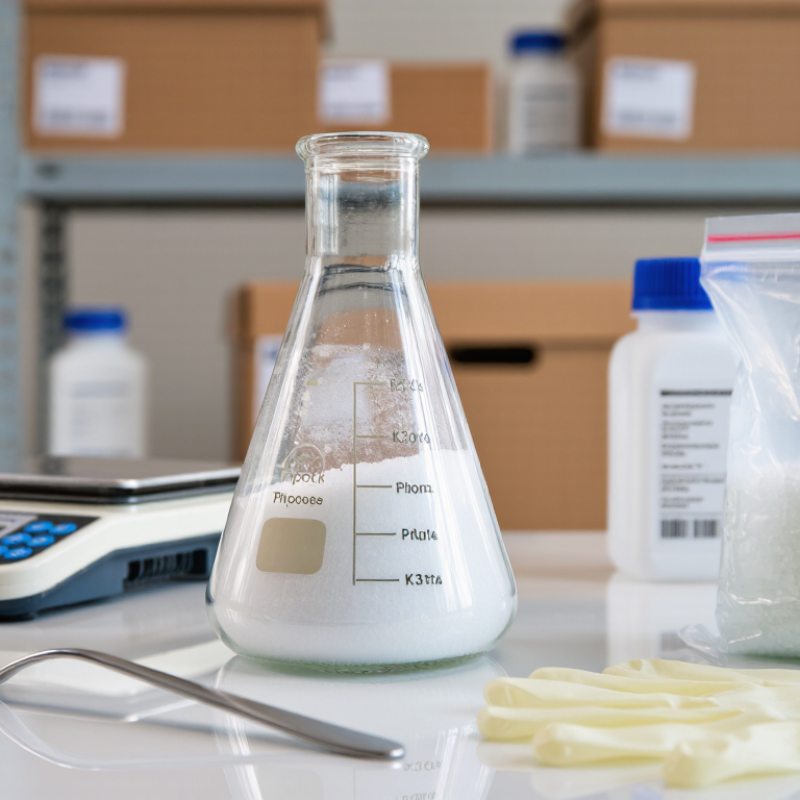
Reliable suppliers communicate clearly about origin, packaging, storage, and lead time. Sealed moisture-resistant bags help protect the white crystalline powder during transport. Ask how they handle batch changes or unexpected test results. Small details reveal real quality control. A low quotation may hide weaker documentation or inconsistent purity. Yet expensive material is not automatically better. Compare matching grades, test methods, and delivery terms. Independent verification can be worthwhile, especially for the first order. Some specifications look complete but omit particle size or insoluble matter, which can affect processing. This is easy to overlook. Supplier reliability should be judged through evidence, not confident promises.
How to Buy Tripotassium Phosphate from Reliable Suppliers?
Tripotassium phosphate (K3PO4, CAS 7778-53-2, molar mass 212.27 g/mol) is available in food, reagent, and technical grades. The chart shows typical minimum assay benchmarks used for procurement screening; the supplier’s current certificate of analysis and applicable specification should always be confirmed.
Procurement guidance: Select food grade for regulated food applications, reagent grade when analytical purity and traceability are required, and technical grade for suitable industrial processing. Before purchasing, verify assay, moisture, heavy metals, insoluble matter, packaging, batch traceability, and compliance with the required standard such as FCC or ACS specifications.
Finding and Comparing Qualified Tripotassium Phosphate Suppliers
Finding a qualified tripotassium phosphate supplier requires more than comparing prices. Start by defining the required grade, purity, particle size, packaging, and annual volume. Food-grade material may require different documentation from technical-grade material. Write these details before requesting quotations.
Ask each supplier for a recent certificate of analysis, safety data sheet, specification sheet, and batch traceability records. Check whether test methods are clearly identified. A reliable supplier should explain moisture, assay, insoluble matter, and heavy-metal limits without vague promises. Samples are useful, but one sample cannot prove consistent production. Request results from several batches when possible.
Supplier experience also matters. Review production capacity, storage conditions, export handling, and quality-control procedures. A remote factory audit or live video inspection can reveal practical details, such as damaged bags or poor pallet protection. Compare full landed costs, including packaging, freight, payment terms, minimum order quantity, and delivery time. The cheapest quotation may not be the most economical choice.
Communication is an important test. Qualified suppliers answer technical questions directly and correct unclear information. Be cautious when documents contain mismatched dates, missing batch numbers, or identical test values across many batches. No checklist is perfect. I would keep a written comparison and score each supplier against the same criteria, while leaving room for professional judgment. Before a long-term order, approve a trial shipment and inspect the material upon arrival. Small omissions can become expensive problems.
Evaluating Supplier Reliability, Documentation, and Compliance
Buying tripotassium phosphate safely starts with supplier evidence, not a polished website. Ask for a current certificate of analysis (COA) for the exact lot. Check assay, pH, moisture, insoluble matter, and heavy-metal limits against your specification. A sample can look clean and still fail testing. Request an SDS, product specification, batch number, manufacturing date, and retest date. These details connect the material to a real production record.
Reliable suppliers explain their quality system clearly. Look for documented batch traceability, controlled storage, calibrated instruments, and a complaint-handling process. If the material is intended for food, water treatment, or technical use, confirm the relevant grade and permitted application in your market. Do not accept vague statements such as “meets global standards.” Ask which standard, which test method, and which regulatory documents support the claim. An independent laboratory review can add confidence, especially for large purchases. It costs time. Sometimes, that is the point.
Tips: Compare the COA with an independently tested sample. Verify the supplier’s legal entity, site address, and export documents before payment. Ask how humidity is controlled during packing; phosphate powders can cake when exposed to moisture. Keep written records of emails, revisions, and approval decisions. I would also request a small trial shipment before signing a long contract. That step is easy to skip, and it may reveal packaging damage, labeling gaps, or slow response times. A dependable supplier welcomes reasonable questions and corrects unclear documents without pressure.
Finalizing Quotes, Samples, Contracts, and Delivery Arrangements
How to Buy Tripotassium Phosphate from Reliable Suppliers?
Finalizing Quotes, Samples, Contracts, and Delivery Arrangements
A reliable purchase begins with a comparable quote, not the lowest number. Request the grade, assay, CAS 7778-53-2, origin, packaging, minimum order quantity, and lead time. For food or technical applications, ask for a current certificate of analysis. It should show purity, moisture, pH, heavy metals, and microbiological results where applicable. A sample should match the quoted batch, not a different production lot. That detail is often missed.
Build acceptance criteria before approving the sample. Check powder flow, color, solubility, and performance in your actual process. Keep a sealed retain sample with the lot number. It may become useful later. The 2023 FAO/WHO food additive specifications provide a sound reference for identity and purity checks, but your local requirements still control release decisions. Do not treat a supplier declaration as independent proof.
The contract should define Incoterms, packing materials, shelf life, inspection rights, claim periods, and replacement duties. Agree on pallet protection and moisture barriers. UNCTAD’s Review of Maritime Transport 2023 reports that over 80% of global merchandise trade by volume moves by sea, so port congestion can affect delivery dates. Use a realistic shipping window, not an optimistic promise. Include shipment tracking, document deadlines, and temperature or humidity controls when necessary. A perfect forecast is unlikely. Leave room for review.
