2026 Top Eco Friendly Packaging Types for Global Buyers
In 2026, global buyers are evaluating packaging beyond appearance and price. They want materials that protect products, reduce waste, and perform across borders. This guide examines the leading eco friendly packaging types for international supply chains. It considers paper-based packs, molded fiber, reusable systems, bioplastics, and lightweight alternatives. Each option brings practical benefits. Each also carries limits.
A sturdy mailer may reduce damage during a long sea journey, while a thin pouch can lower shipping weight. However, material claims require careful checking. Buyers should review recycled content, composting conditions, barrier coatings, production energy, and end-of-life routes. Supplier certificates matter, but they do not replace traceability. Factory samples, packaging tests, and clear declarations offer stronger evidence. Details matter.
The discussion follows real purchasing questions: Can the package protect goods in humid warehouses? Will local recycling facilities accept it? Does the design support efficient pallet stacking? It also compares cost, durability, branding, and regional availability. No material is perfect. A package marketed as green may perform poorly when shipped overseas or disposed of incorrectly. Responsible decisions need evidence, honest trade-offs, and room for reassessment. The choices ahead are practical, not fashionable. This overview helps buyers identify suitable formats with greater confidence.
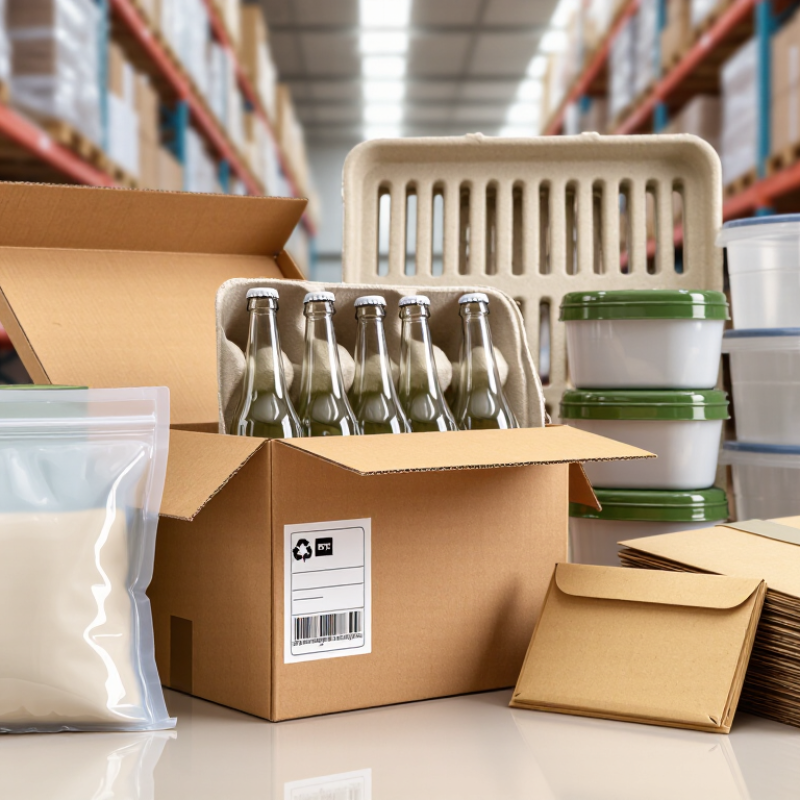
What Makes Packaging Eco Friendly in 2026
What makes packaging eco friendly in 2026? The answer is not a leaf printed on a carton. It is measured performance across the product’s full life cycle. Packaging should reduce material use, include verified recycled content, and fit local collection systems. The OECD’s Global Plastics Outlook reported that only 9% of plastic waste was recycled globally in 2019. That statistic challenges vague recyclability claims. Buyers need evidence, not green color.
Material choice depends on real use. A lightweight fiber box can reduce transport emissions, but moisture may require coatings or extra layers. A compostable pouch sounds attractive, yet it may need industrial composting facilities that many regions still lack. Not always practical. UNEP’s 2023 Turning off the Tap report estimates that plastic pollution could fall by 80% by 2040 through reuse, recycling, redesign, and reduced consumption. Packaging decisions should reflect those pathways, not just material labels.
Reliable specifications should disclose weight, recycled content, barrier layers, manufacturing energy, and end-of-life instructions. Buyers should request third-party testing and region-specific disposal evidence. A package recyclable in one city may become waste in another. I have seen sustainability claims fail when the collection route was ignored. That weakness deserves attention. Eco friendly packaging is therefore a documented system, not a single material. It must protect the product without creating a larger waste problem.
Key Types of Sustainable Packaging for Global Buyers
2026 Top Eco Friendly Packaging Types for Global Buyers
Key Types of Sustainable Packaging for Global Buyers
Global buyers are examining packaging beyond appearance and price. Material origin, shipping performance, and disposal access now influence purchasing decisions. Recycled paper and corrugated board remain practical choices for many exports. They are lightweight, printable, and widely recyclable in developed collection systems. However, moisture can weaken them quickly. That limitation matters.
Molded fiber packaging offers a useful option for trays, inserts, and protective corners. It can replace some plastic components without creating a heavy shipment. Fiber made from agricultural residue may also reduce dependence on virgin materials. Still, buyers should verify fiber content and manufacturing conditions. Bio-based films deserve similar caution. They may come from renewable feedstocks, but bio-based does not always mean compostable. Industrial composting may be unavailable near the customer.
Reusable packaging includes textile bags, durable crates, and returnable transport boxes. These types work best when buyers control regular delivery routes. Otherwise, reverse shipping can increase emissions and costs. A practical sourcing review should examine the full life cycle, not only the material label. Ask suppliers for recycled content data, test reports, and disposal guidance. Independent verification strengthens confidence, although paperwork can still contain gaps.
Small pilot shipments reveal real problems. Corners may collapse, labels may peel, or customers may misunderstand disposal instructions. Perfect packaging is unlikely on the first attempt. That is worth admitting. Global buyers can improve results by testing humidity, stacking pressure, and local waste conditions before placing large orders.
Materials and Production Methods Behind Eco Friendly Packaging
Eco-friendly packaging starts with material choice, but production determines much of its real impact. Paperboard from certified, recycled fibres can reduce virgin resource demand. Moulded fibre suits trays, inserts, and protective cushioning. Recycled PET and recycled HDPE support durable bottles and containers. Bio-based films can replace some fossil-based plastics, yet they need careful sourcing and disposal systems.
Production methods matter equally. Lightweighting reduces material use during extrusion and forming. Water-based coatings can improve printability with fewer solvent concerns. Mechanical recycling usually needs less energy than chemical recycling, although contamination remains a practical weakness.
The OECD Global Plastics Outlook (2022) reported that only 9% of global plastic waste was recycled in 2019.
UNEP’s Turning off the Tap report (2023) found that reuse, recycling, and material redesign could cut plastic pollution by 80% by 2040.
These figures expose an uncomfortable issue: recyclable packaging may still fail without collection infrastructure. Better packaging is not always better packaging.
Tips:
Ask suppliers for recycled content, energy data, and third-party certifications. Test packaging under real humidity, compression, and transport conditions. A thin pouch may look efficient, but damaged goods create hidden waste. Use life-cycle assessment instead of relying on one attractive material claim. This process is imperfect. Data quality varies across regions, and “compostable” packaging can become misleading without industrial composting access. Still, measured improvements are more reliable than attractive promises.
How to Compare Packaging Performance, Cost, and Environmental Impact
2026 Top Eco Friendly Packaging Types for Global Buyers
Comparing eco-friendly packaging requires more than checking recycled content. In real purchasing work, I examine drop resistance, moisture protection, sealing strength, and storage conditions. A paper-based mailer may look sustainable, yet it can fail after hours in humid warehouses. Mold risk is not a small detail. Reusable containers can perform well, but their environmental value depends on return rates, cleaning, and transport distance.
Cost comparisons should include the full supply chain. Measure unit price, minimum order quantity, filling speed, warehouse space, damage rates, and disposal fees. A lighter package may reduce freight emissions, but thinner material could increase product loss. I also request supplier test reports, material specifications, and current recycling guidance for each destination market. These documents improve confidence, although they may not reveal every real-world weakness. My own mistake was trusting laboratory strength data without testing filled packages during seasonal shipping. That result changed our evaluation process.
Tips: Create a simple scorecard with performance, delivered cost, and environmental impact. Test samples with actual products. Compare carbon data by functional unit, such as one protected shipment, not one package. Ask whether local facilities can process the material. If the answer is unclear, record that uncertainty instead of hiding it. A practical choice may be less impressive on paper, but more reliable in daily operations.
Global Standards and Buying Considerations for Sustainable Packaging
Global buyers now need proof, not green language. OECD’s Global Plastics Outlook (2022) reported that only 9% of plastic waste was recycled worldwide. That figure changes the buying conversation. For 2026 sourcing, compare molded fiber, paper-based formats, reusable systems, and certified compostable packs by end-of-life access. A lighter pack can still fail if local recyclers reject it.
International purchases should reference ISO 18601–18606, covering packaging and environmental management. Buyers should also check recycled content, barrier coatings, food-contact compliance, and migration test results. Compostable packaging needs careful verification against standards such as EN 13432 or ASTM D6400. Certification alone does not guarantee suitable industrial collection. Ask for current test reports, chain-of-custody records, and clear disposal instructions in the destination language.
Local infrastructure matters more than attractive claims. UNEP’s Turning off the Tap report (2023) suggests plastic pollution could be reduced by 80% by 2040 through reuse, recycling, and material redesign. However, reuse systems require washing networks, return rates, and reliable transport. Those costs are often underestimated. Buyers should calculate packaging weight, breakage, storage space, and reverse logistics together. No format wins everywhere. A practical specification may accept minor visual flaws when durability and recovery improve. That trade-off deserves honest review.